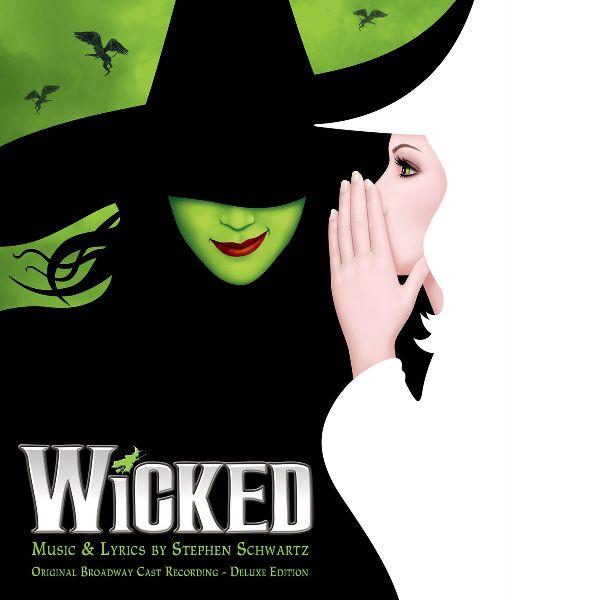
Wicked Lyrics: Song List
- Act 1
- No One Mourns the Wicked
- Dear Old Shiz
- The Wizard and I
- What Is This Feeling?
- Something Bad
- Dancing Through Life
- Popular
- I'm Not That Girl
- One Short Day
- A Sentimental Man
- Defying Gravity
- Act 2
- Thank Goodness
- The Wicked Witch of the East
- Wonderful
- I'm Not That Girl (Reprise)
- As Long as You're Mine
- No Good Deed
- March of the Witch Hunters
- For Good
- Finale
About the "Wicked" Stage Show
Release date of the musical: 2003
"Wicked" – The Musical Guide & Song Meanings
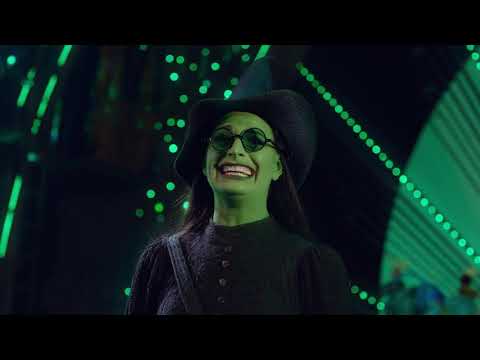
Review: what the lyrics are really doing
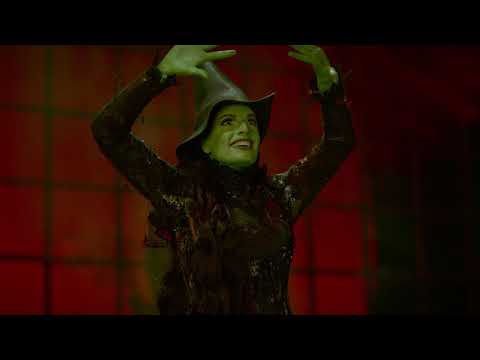
“Wicked” sells its plot as backstory, then slips you the real thesis: language decides who gets to be “good.” Stephen Schwartz’s lyrics are at their sharpest when they sound like social behavior. Glinda’s bright phrasing arrives pre-approved, like it was workshopped by a focus group. Elphaba’s lines start out blunt and anatomically honest, then slowly learn the art of persuasion, of reframing, of surviving inside a narrative that wants her as a villain.
The show’s central lyric mechanism is public speech versus private speech. At Shiz, the girls perform identity as a sport. In Oz proper, the crowd performs morality as a civic duty. That is why the funniest numbers are also the most revealing: “Popular” is charm as social engineering, “What Is This Feeling?” is hatred as instant community. Even “Defying Gravity,” the big catharsis, is less about flight than about rejecting the approved vocabulary of obedience.
Musically, Schwartz writes with Broadway clarity and pop-hook efficiency, and that matters because the story pivots on slogans. When characters are trapped, the songs tighten into repeating phrases. When they are honest, the melodic lines open up and the rhymes stop trying to win. The lyrics keep asking the same question in different disguises: who benefits when everyone agrees on the story?
Listener tip: if you want the plot fast, listen in this order: “No One Mourns the Wicked,” “The Wizard and I,” “Dancing Through Life,” “Defying Gravity,” then jump to Act II for “Thank Goodness,” “No Good Deed,” and “For Good.” You will get the arc of reputation, radicalization, and consequence without needing a map.
How it was made
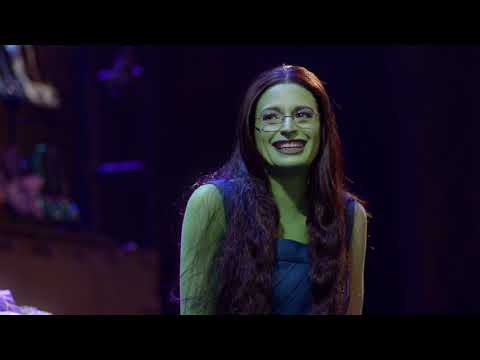
“Wicked” began life as a high-wire adaptation problem: turn Gregory Maguire’s novel into a theatrical story that can move like a fairy tale and argue like a civics class. Winnie Holzman’s book makes the friendship the engine. Schwartz’s score makes the culture the antagonist. The production roadmap matters, too: an out-of-town run in San Francisco in 2003, then Broadway later that year at the Gershwin, with Joe Mantello directing and Wayne Cilento shaping musical staging. That combination leans into velocity. Scenes snap. Point of view flips. The show wants you to feel how quickly a label sticks.
One origin detail that keeps turning up in Schwartz’s own commentary is the “Unlimited” musical idea, a rising theme that nods to “Somewhere Over the Rainbow.” It is a clever choice because it places Elphaba’s desire in conversation with Oz’s most famous longing. The lyric job, then, is to make that desire sound dangerous in public and necessary in private. That is the show’s consistent trick: the same emotional impulse reads as heroism or threat depending on who is speaking about it.
On album, the writing becomes even more technical. The cast recording preserves most of the score, but it is curated for narrative spoiler control and pacing. In other words: even the soundtrack behaves like Oz, managing information.
Key tracks & scenes
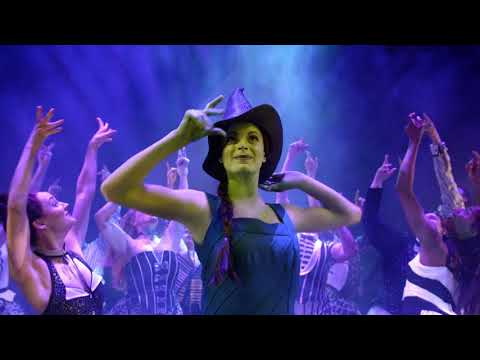
"No One Mourns the Wicked" (Glinda, Citizens of Oz)
- The Scene:
- Act I opening. Munchkinland celebrates a death with parade brightness. Glinda arrives in ceremonial light, framed like a living headline. The mood is jubilant, which is the first warning sign.
- Lyrical Meaning:
- The lyric is crowd logic, clean and confident. It defines “wicked” as a category so the community can feel safe. Glinda’s interjections add a second layer: a public smile trying to cover a private memory.
"The Wizard and I" (Elphaba)
- The Scene:
- Early Shiz. Elphaba is promised mentorship and opportunity. Lighting often isolates her in a hopeful pool as the campus fades, a classic “future projection” moment.
- Lyrical Meaning:
- This is ambition with a moral alibi. Elphaba sings about power as if it will automatically become justice. The lyric’s innocence is deliberate; it makes the later betrayals sting.
"What Is This Feeling?" (Glinda, Elphaba, Students)
- The Scene:
- Shiz dorm life becomes a pep rally for mutual disgust. The staging treats dislike like a school tradition, bright and rhythmic, with the ensemble acting as a Greek chorus of mean approval.
- Lyrical Meaning:
- The lyric weaponizes specificity. They do not just dislike each other; they build a shared language of contempt. It is a duet that teaches them how to perform identity through opposition.
"Dancing Through Life" (Fiyero, Students)
- The Scene:
- Shiz shifts into a party machine. Movement turns philosophical laziness into seduction. The Ozdust ballroom arrives as a public testing ground for who gets laughed at and who gets forgiven.
- Lyrical Meaning:
- Fiyero’s lyric is a thesis about avoiding pain. It is also a manual for privilege: if you refuse to feel deeply, you rarely have to change.
"Popular" (Glinda)
- The Scene:
- Dorm room makeover with comic precision. Glinda conducts the number like a lesson plan, bright lighting, brisk gestures, control disguised as kindness.
- Lyrical Meaning:
- Glinda’s lyrics are social strategy. She sells self-improvement as friendship, but the subtext is power: she is teaching Elphaba how to be legible to the crowd.
"Defying Gravity" (Elphaba, Glinda, Morrible, Ensemble)
- The Scene:
- End of Act I. The Wizard’s chamber becomes a courtroom, then a launchpad. Alarms, guards, and spectacle collide as Elphaba chooses exile. Lighting typically shifts from institutional glare to a fierce, singular focus as she rises.
- Lyrical Meaning:
- This is a public statement that begins as private grief. The lyric is full of refusals and redefinitions, a person rewriting her own headline in real time.
"Thank Goodness" (Glinda, Morrible, Citizens of Oz)
- The Scene:
- Act II opens with Oz in celebration mode again, now with state-level polish. Glinda is displayed as proof that the system works. The smile is bigger. The air feels thinner.
- Lyrical Meaning:
- The lyrics perform relief while confessing discomfort. Glinda narrates her own success like she is trying to convince herself it counts as happiness.
"No Good Deed" (Elphaba)
- The Scene:
- Act II crisis point. Elphaba alone with consequences. The stage often darkens into a laboratory of anger, with bursts of harsh light as magic becomes a stress response.
- Lyrical Meaning:
- A collapse into cynicism that still sounds like integrity. The lyric flips the moral scoreboard: if good actions get punished, then goodness becomes a liability, not a virtue.
"For Good" (Glinda, Elphaba)
- The Scene:
- Late Act II. A quieter space inside a loud world. The staging usually strips away crowd noise and politics, letting two people speak like themselves again.
- Lyrical Meaning:
- The lyric is apology without self-flagellation. It admits mutual influence, then accepts that influence does not erase harm. The repeated phrase lands because it is modest: change, not perfection.
Live updates (2025–2026)
Information current as of February 2026. On Broadway, “Wicked” is still running at the Gershwin. The current company has been in active rotation, with Playbill reporting that Elphaba Lencia Kebede and Glinda Allie Trimm will play final performances March 1, 2026, and additional casting changes rolling in during early March. The official show site’s cast page reflects ongoing updates as new principals step in.
On the road, the North American tour remains a major pipeline for first-time viewers, and the official tour site lists 2026 stops including Pittsburgh (January–February), Rochester (February–March), and Providence (March). If you are tracking tickets, the Broadway production also just posted a headline-making benchmark: Playbill and TheaterMania reported “Wicked” became the first Broadway show to gross over $5 million in a single week (late December 2024), a reminder that the brand is not merely surviving in the movie era, it is feeding on it.
In London, the West End production continues at the Apollo Victoria, with the UK “Cast & Creative” page serving as the most reliable snapshot of who is currently in the air. On screen, the film adaptation has created a parallel listening economy: the stage album surged in renewed attention post-release, and the sequel’s publicity cycle has added new Schwartz commentary on why “For Good” keeps resurfacing in real-world rites of passage.
Notes & trivia
- Broadway opening date: October 30, 2003. Previews began October 8, 2003.
- The Original Broadway Cast Recording was recorded in November 2003 and released in December 2003 by Decca Broadway (with later expanded editions).
- Schwartz has explained that the “Unlimited” musical idea nods to “Somewhere Over the Rainbow,” a deliberate Oz-to-Oz bridge inside the score.
- Playbill reported Lencia Kebede as the first Black actor to play Elphaba full-time on Broadway.
- The cast album won the Grammy Award for Best Musical Show Album in 2005, per Playbill’s Grammy coverage.
- The show won three Tony Awards in 2004, including Idina Menzel (Leading Actress in a Musical) plus Scenic Design and Costume Design.
- In late 2024, “Wicked” set a weekly Broadway gross record by surpassing $5 million in one week, according to Playbill’s grosses analysis and TheaterMania.
Reception
The critical story of “Wicked” has always been a split-screen: reviewers arguing about the material while conceding the production’s force. That tension has aged into something almost useful. The show is built around contested narratives, and its reception became one. Over time, the lyrics have proven stickier than the early debate suggested, mainly because they are designed to be repeated in public. “Wicked” understands how reputations spread: as choruses.
“If every musical had a brain, a heart and the courage of Wicked, Broadway really would be a magical place.”
Richard Zoglin, Time
“The most complete, and completely satisfying, new musical I've come across in a long time.”
Elysa Gardner, USA Today
“Wicked so overplays its hand that it seriously dilutes its power to disturb.”
Ben Brantley, quoted via Den of Geek
Awards
- Tony Awards (2004): Idina Menzel won Leading Actress in a Musical; Eugene Lee won Scenic Design; Susan Hilferty won Costume Design.
- Drama Desk Awards (2004): won Outstanding Musical plus awards for book, lyrics, director, costume design, and set design (six total).
- Grammy Awards (2005): Original Broadway Cast Recording won Best Musical Show Album.
Quick facts
- Title: Wicked
- Broadway year: 2003 (opened Oct 30; previews from Oct 8)
- Type: Musical
- Based on: Gregory Maguire’s novel “Wicked: The Life and Times of the Wicked Witch of the West”
- Book: Winnie Holzman
- Music & lyrics: Stephen Schwartz
- Director (Broadway): Joe Mantello
- Musical staging: Wayne Cilento
- Original Broadway theatre: Gershwin Theatre (New York)
- Selected notable placements: Shiz University (“What Is This Feeling?”), the Ozdust Ballroom (“Dancing Through Life”), the Emerald City (“One Short Day”), the Wizard’s chamber (“Defying Gravity”)
- Original Broadway Cast Recording: recorded Nov 2003; released Dec 2003; label Decca Broadway; producer Stephen Schwartz
- Availability: widely available on major streaming platforms; deluxe and anniversary editions expand the track list
Frequently asked questions
- Who wrote the lyrics for “Wicked”?
- Stephen Schwartz wrote the music and lyrics; Winnie Holzman wrote the book.
- What is the central idea behind the lyrics?
- Reputation. The show treats “good” and “wicked” as labels manufactured by institutions and crowds, then tests what those labels do to friendship.
- Is the cast recording complete?
- It includes the vast majority of the score, but it is curated. Some material is shortened or omitted to manage pacing and plot reveals.
- Is “Wicked” still on Broadway in 2026?
- Yes. It continues its long-running Broadway engagement at the Gershwin Theatre, alongside an active North American tour and an ongoing West End production.
- Why do people use “For Good” at graduations and memorials?
- Because the lyric frames change as relational rather than heroic. It gives people a way to thank someone without rewriting the past.
- What should I listen to before seeing the show so I can follow the story?
- Start with “No One Mourns the Wicked,” “The Wizard and I,” “Dancing Through Life,” and “Defying Gravity.” That sequence establishes the friendship, the system, and the break.
Key contributors
| Name | Role | Contribution |
|---|---|---|
| Stephen Schwartz | Composer, lyricist | Built a pop-forward Broadway score where slogans become plot and choruses become public opinion. |
| Winnie Holzman | Book writer | Centered the story on a friendship under political pressure, keeping the argument human-scale. |
| Joe Mantello | Director | Staged fast point-of-view shifts, letting the crowd function as a character and a threat. |
| Wayne Cilento | Musical staging | Turned campus comedy and state spectacle into movement language that reads at Broadway scale. |
| Eugene Lee | Scenic design | Created Oz as a mechanized storybook, a world that can feel playful while it tightens its grip. |
| Susan Hilferty | Costume design | Encoded social hierarchy in silhouette and color, especially in the Shiz and Emerald City worlds. |
References & Verification: Production dates and venue verified via IBDB and Broadway.org. Current Broadway cast updates verified via official Wicked site plus Playbill reporting. North American tour schedule verified via the official tour site. West End company verified via wickedthemusical.co.uk cast page plus Playbill/Whatsonstage coverage. Weekly gross record verified via Playbill grosses analysis and TheaterMania. Critical reception quotes verified via Time, New York Theatre Guide’s review roundup, and a Brantley quote excerpted in Den of Geek. Awards verified via Tony Awards site, Broadway.com Drama Desk reporting, and Playbill Grammy coverage. Album metadata cross-checked via Apple Music and cast-album documentation.