
42nd Street Lyrics: Song List
- Act 1
- Overture
- Audition
- Young and Healthy
- Shadow Waltz
- Go Into Your Dance
- You're Getting to Be a Habit with Me
- Getting Out of Town
- Dames
- Keep Young and Beautiful
- Dames (Continued)
- I Only Have Eyes for You
- We're in the Money
- Act One Finale
- Act 2
- Entr'acte
- Sunny Side to Every Situation
- Lullaby of Broadway
- About a Quarter to Nine
- With Plenty of Money and You
- Shuffle off to Buffalo
- 42nd Street
- 42nd Street (Reprise)
- Finale Ultimo
About the "42nd Street" Stage Show
Release date of the musical: 2001
“42nd Street” – The Musical Guide & Song Meanings
Review: what the lyrics are really doing
“42nd Street” is a musical about making a musical, which sounds cozy until you notice the real antagonist is math: money, time, bodies, and the brutal arithmetic of who gets seen. The 2001 Broadway revival leans into that pressure cooker, and the lyrics function like stage directions with punchlines. They don’t just decorate the plot; they explain the rules of survival inside it, even when those rules are dated, sharp-edged, or casually cruel.
The show’s lyric engine is Al Dubin (with Johnny Mercer also credited for lyrics), writing in short, streetwise bursts that treat romance as a transaction and ambition as a kind of weather. When Dorothy sings “You’re Getting to Be a Habit with Me,” the words flirt with sweetness while the situation undercuts it: the number is literally shaped by a jealous financier policing the staging. That friction is the point. The lyrics keep insisting on glamour while the book keeps showing you the invoice.
Musically, it’s Harry Warren’s swing-era craftsmanship repurposed as character psychology. The sound is bright, percussive, tap-friendly, and built for theatrical momentum. In the 2001 revival’s ecosystem, the songs read like lessons: “Audition” teaches the kids to sell, “Go Into Your Dance” teaches Peggy to belong, “Lullaby of Broadway” sells the city as both seduction and trap. If you want a show where the lyrics “develop” subtly in confessional soliloquies, wrong address. This one communicates in neon.
How it was made
The show is an adaptation of a Hollywood backstage story, rebuilt for the stage in 1980 with a book by Michael Stewart and Mark Bramble and a score assembled from Warren’s movie-musical catalogue, with Dubin and Mercer credited for lyrics. The clever trick is that “42nd Street” is not trying to pretend these are newly written diary entries. It’s a curated hit parade, arranged so that old lyrics land as new plot beats.
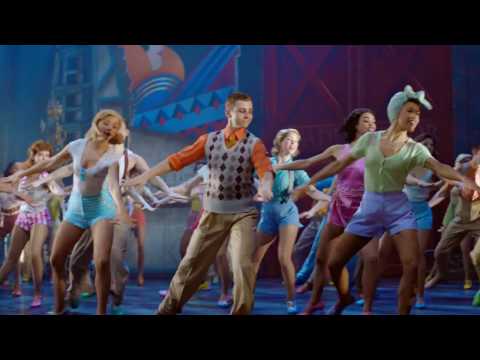
The 2001 Broadway revival opened May 2, 2001, and its mission was not reinvention so much as re-engineering: Mark Bramble directed, and Randy Skinner supplied choreography that honored the original while expanding it, including a stated emphasis on tap and other dance vocabularies. The revival won the Tony for Best Revival of a Musical, and the production’s awards footprint is a reminder that, for this title, dance and pace are the headline even when you came “for the songs.”
The cast album story is unusually concrete: the company went into the studio May 7, 2001, and the commercial “New Broadway Cast Recording” arrived that June. That short runway matters because it captures the show while the revival’s internal rhythms were still fresh, before replacements and re-blocking could sand down the edges.
Key tracks & scenes
“Audition” (Company)
- The Scene:
- Act I begins in a rehearsal hall where Andy Lee runs kids through their paces while the stage manager tracks names and details. It’s bodies in motion, clipboard energy, and the sense that the room is already judging you. The lighting is typically unromantic: work lights, bright and flat, because the fantasy has not earned its spotlight yet.
- Lyrical Meaning:
- The lyric is the show’s thesis statement in a chorus line: precision, stamina, and the quiet humiliation of being interchangeable. It sells “hoofing” as labor, not dreams, which is why the later glamour numbers hit harder.
“Young and Healthy” (Peggy, Billy)
- The Scene:
- Peggy shows up late, nerves and all, and gets pushed into singing anyway. She literally ties on a lucky scarf like armor, then performs while the decision-makers pretend they’re too busy to be moved. Staging often isolates her in a single pool of light while the room stays watchful.
- Lyrical Meaning:
- On paper it’s a buoyant standard. In context it becomes a résumé sung out loud: youth as currency, optimism as strategy. The lyric’s health metaphor reads like self-marketing in a recession.
“Shadow Waltz” (Dorothy, Girls)
- The Scene:
- Dorothy arrives with her backer, asserts power, then gets asked to “try out” anyway. The number becomes a stylized rehearsal showcase, often with high-contrast lighting that makes the title literal: silhouettes, patterns, and the sense that Dorothy is both star and hostage.
- Lyrical Meaning:
- The lyric romanticizes being consumed by someone else’s presence, which is deliciously ironic for Dorothy, who is being consumed by other people’s money and patience. The words float; the situation clamps down.
“Go Into Your Dance” (Peggy, Annie, Phyllis, Lorraine, Maggie, Ensemble)
- The Scene:
- On the way to lunch, the chorus girls teach Peggy the city’s code. It’s social onboarding disguised as choreography, and it often plays with moving street-and-corridor staging as the group drifts back toward the theatre. The mood is conspiratorial: mentorship with elbows.
- Lyrical Meaning:
- The lyric is advice that sounds like encouragement until you hear the subtext: keep moving, keep smiling, don’t stop long enough for anyone to say no. It’s Broadway etiquette as survival tactic.
“You’re Getting to Be a Habit with Me” (Dorothy)
- The Scene:
- Dorothy rehearses a love scene with Billy, but Abner interrupts and polices the staging. The number survives, but it’s revised in real time by power. The staging often keeps Dorothy framed like a star while the blocking reminds you she’s being monitored.
- Lyrical Meaning:
- Dubin’s lyric sells addiction-as-romance, but the plot turns it into a portrait of dependence: Dorothy’s emotional history, Abner’s control, and the industry’s willingness to treat intimacy as negotiable.
“We’re in the Money” (Company)
- The Scene:
- During the Philadelphia tryout of “Pretty Lady,” the show-within-the-show erupts into a depression-era fantasy of sudden wealth. It’s staged as a production number with hard, shiny angles and chorus geometry. It lands right before everything breaks: Dorothy is knocked down and cannot continue.
- Lyrical Meaning:
- The lyric is pure denial, which is why it’s funny and a little desperate. It’s the cast singing prosperity into existence, and the plot immediately answers with injury and panic. The words promise abundance; the story enforces scarcity.
“Lullaby of Broadway” (Julian, Company)
- The Scene:
- Act II pivots at the station: Julian chases Peggy before she can escape back to Allentown. The company joins him, and the number becomes a group intervention, part seduction, part sales pitch. The lighting frequently shifts from cold travel-station realism into warmer theatrical glow as she’s pulled back in.
- Lyrical Meaning:
- The lyric praises Broadway nightlife while admitting its sleepless cost. Historically it’s a showbiz anthem, and in the plot it becomes Julian’s argument that the city is worth the damage, a risky thesis delivered with a smile.
“About a Quarter to Nine” and “42nd Street” (Dorothy, Peggy, Company)
- The Scene:
- Dorothy coaches Peggy for the final push, then opening night detonates into success. “About a Quarter to Nine” plays like a pep talk with a ticking clock; “42nd Street” is the pay-off, a full-company celebration where the stage picture turns into a moving marquee.
- Lyrical Meaning:
- “About a Quarter to Nine” is about timing as destiny. “42nd Street” is the lyric version of a camera crane: it lifts from individual hustle to a whole city of dancing feet, making stardom feel both personal and mass-produced.
Live updates (2025-2026)
As of the most recent public listings, there is no newly announced Broadway engagement for “42nd Street” in 2025-2026, and major UK ticketing aggregators have shown “no upcoming shows” at points, which usually signals a gap between tour legs rather than a disappearance. The title remains very active via licensing and regional production calendars, which is where most “current cast” information actually lives now.
If you’re tracking what’s real (and not just wishful), start with rights holders and venue calendars. Concord’s licensing page is the clearest indicator that multiple versions circulate and that the show remains in steady rotation for producing organizations. For a concrete example of ongoing scheduling, some youth and regional presenters already list the show as part of their 2026 seasons, with ticketing pages posted well in advance.
Practical listening tip for 2025-2026 audiences: if you’re seeing a licensed production, ask which version they’re using (some numbers and arrangements vary by edition), then use the 2001 cast album as your “plot spine.” It captures the revival’s pacing and tends to match what many post-2001 stagings borrow.
Notes & trivia
- “Lullaby of Broadway” was introduced in the 1935 film “Gold Diggers of 1935” and won the Academy Award for Best Original Song, long before it became the show’s signature seduction number.
- The 2001 Broadway revival opened May 2, 2001 and ran through January 2, 2005, with more than 1,500 performances logged.
- The 2001 cast album was recorded May 7, 2001, a week after opening season eligibility pressure peaked, and released in early June.
- The 2001 revival won the Tony Award for Best Revival of a Musical, and its choreography was a major awards talking point.
- Critics have flagged the lyrics’ period attitudes, including lines that reduce women to looks, as part of the show’s complicated inheritance.
- The show’s backstage plot hinges on Dorothy’s injury during “We’re in the Money,” a cruel joke embedded inside the most upbeat lyric in the score.
- The “42nd Street” title number has a long shadow from Busby Berkeley’s film language, even when staged live, because the lyric invites a whole-city montage effect.
Reception: then vs now
The 2001 revival’s official story is victory: awards, longevity, and the kind of brand-name reassurance Broadway sells when it wants tourists to feel smart. The critical story is more interesting. Over time, reviewers have praised the machine-like excellence of the staging and dancing while being less sentimental about the book and some lyrics, which can read as bluntly sexist when not cushioned by nostalgia.
“If you don’t like tap-dancing, run for the hills: 42nd Street is the tyrannosaurus rex of tap.”
“What keeps the show alive are the dances, and Bramble as director and Randy Skinner as choreographer stage them with well-drilled exactitude…”
“In this day and age it is astonishing to hear the chorus sing… ‘What’s cute about a little cutie is her beauty, not brains.’ ”
Quick facts
- Title: 42nd Street
- Year (revival focus): 2001 Broadway revival opened May 2, 2001
- Type: Backstage musical, tap-driven dance show, hit-parade score
- Music: Harry Warren
- Lyrics: Al Dubin; additional lyrics credited to Johnny Mercer
- Book: Michael Stewart and Mark Bramble
- 2001 Broadway revival director: Mark Bramble
- 2001 Broadway revival choreography: Randy Skinner
- Selected notable placements (story beats): “Audition” (rehearsal hall); “We’re in the Money” (Philadelphia tryout); “Lullaby of Broadway” (train station persuasion); “42nd Street” (opening-night triumph)
- Cast album (revival): “42nd Street (New Broadway Cast Recording)” recorded May 7, 2001; commercial release dated June 5, 2001
- Album availability notes: Widely distributed as a commercial cast recording; track listings and credits appear across major music databases
- Rights status: Licensed for production; multiple versions exist, confirm edition before you build a listening guide around it
Frequently asked questions
- Who wrote the lyrics for “42nd Street”?
- The stage musical credits lyrics primarily to Al Dubin, with additional lyric credit to Johnny Mercer, drawing from songs originally written for 1930s film musicals and reshaped into a stage narrative.
- Is the 2001 cast recording the best entry point for understanding the plot?
- For most listeners, yes. The 2001 “New Broadway Cast Recording” tracks the revival’s pacing and captures how the songs function as plot engines rather than stand-alone standards.
- Where does “Lullaby of Broadway” come from?
- It originated as a 1935 film song introduced in “Gold Diggers of 1935,” and later became one of “42nd Street’s” signature numbers, used as Julian’s persuasive anthem in Act II.
- Is there a filmed version I can watch?
- There have been broadcast and trailer materials associated with staged productions, and “Great Performances” has presented “42nd Street” programming in the past. Availability changes by region and distributor, so confirm what’s currently streamable where you live.
- Why do some people criticize the lyrics?
- Because some lines reflect the era’s gender politics with little insulation. Modern reviewers have singled out moments like “Keep Young and Beautiful” as an example of period attitudes landing bluntly in contemporary ears.
Key contributors
| Name | Role | Contribution |
|---|---|---|
| Harry Warren | Composer | Core musical language of the score, built from Hollywood-era standards. |
| Al Dubin | Lyricist | Primary lyrical voice: streetwise, romantic, and often knowingly transactional. |
| Johnny Mercer | Lyricist (additional credit) | Additional lyric contributions within the assembled score. |
| Michael Stewart | Book writer | Backstage structure and character conflicts that let the standards tell a story. |
| Mark Bramble | Book writer; 2001 revival director | Steers the revival’s tempo and clarity, keeping plot and dance tightly linked. |
| Randy Skinner | Choreographer (2001 revival) | Tap-centric staging approach that became central to the revival’s identity. |
| Gower Champion | Original director-choreographer | Established the theatrical blueprint that later revivals echo and revise. |
| Christine Ebersole | Performer (Dorothy Brock, 2001) | Tony-winning performance that anchors the revival’s emotional stakes. |
| Kate Levering | Performer (Peggy Sawyer, 2001) | Embodies the “kid becomes star” arc in a role that must act and tap equally. |
| Michael Cumpsty | Performer (Julian Marsh, 2001) | Plays the director as a hard-edged craftsman whose tenderness leaks through. |
Sources: IBDB; Playbill; Concord Theatricals; Masterworks Broadway; AllMusic; WhatsOnStage; The Telegraph; The Guardian; LondonTheatre.co.uk; Children’s Musical Theaterworks ticketing; LA Times; Wikipedia (42nd Street; Lullaby of Broadway); Everything Theatre (Randy Skinner interview).