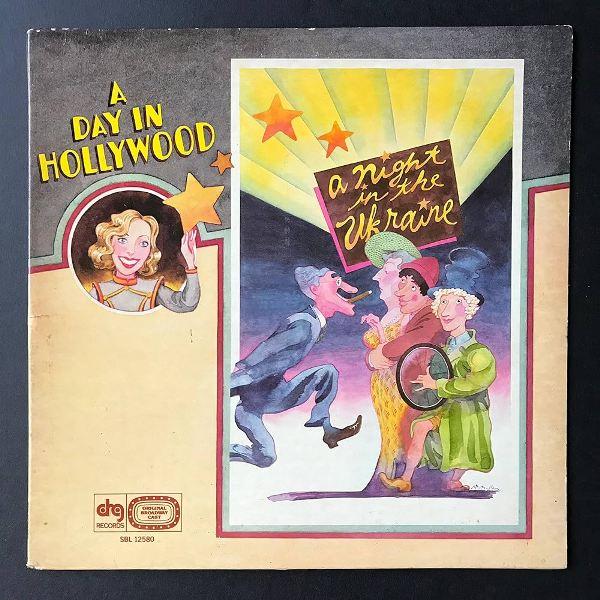
A Day in Hollywood / A Night in the Ukraine Lyrics: Song List
- Just Go to the Movies
- Famous Feet
- I Love a Film Cliche
- Nelson
- The Best in the World
- It All Comes Out of the Piano
- Ain't We Got Fun
- Too Marvelous for Words
- Japanese Sandman
- On the Good Ship Lollipop
-
Double Trouble

- Louise
- Sleepy Time Gal
- Beyond the Blue Horizon
- Thanks for the Memories
- Another Memory
- Doin' the Production Code
- A Night in the Ukraine
- Samovar the Lawyer
- Just Like That
- Again
- A Duel! A Duel!
- Natasha
- A Night in the Ukraine (Reprise)
About the "A Day in Hollywood / A Night in the Ukraine" Stage Show
TL;DR: A Day in Hollywood on its 1st part is about singing, dancing, and their numbers are done by bailiffs in Gruman's Chinese Theater. So, in the first half of the exhibit, there are characteristic tunes, dancing numbers, each accomplished by a group of people. A plenty of parts are soaked with the spirit of colossal musicals of the silver screens.
This performance totally performed through more than 165 shows on the West End until it retired in March 1979. Broadway's opening was in May 1980, and one year ago, it was closed after almost 600 shows. Fellows with almost the same names, Tommy Tune & Thommie Walsh, were those who directed and choreographed it all the time.
Tony Walton performed the scenic design. Totally 24 tracks of funny and sad musical direction is what may be highlighted in this piece.
Release date of the musical: 1980
"A Day in Hollywood / A Night in the Ukraine (Original Broadway Cast Recording)" – Album Guide to Tracks and Key Scenes
Review
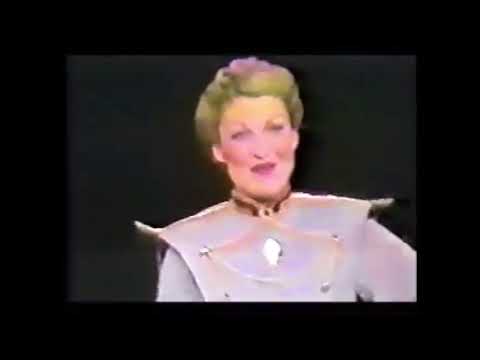
Can a single cast album feel like both a love letter to Hollywood and a Marx Brothers movie that never got made? This recording comes very close. The A Day in Hollywood / A Night in the Ukraine Original Broadway Cast album captures a musical that is literally split in two: Act I is a tap-happy, reference-packed revue set in Grauman’s Chinese Theatre; Act II is a knockabout farce that imagines Chekhov’s The Bear
as if Groucho and his brothers had hijacked it. On disc, that double feature turns into a surprisingly coherent listening journey, moving from glossy nostalgia to screwball anarchy.
The album preserves a score built by composer Frank Lazarus and lyricist–bookwriter Dick Vosburgh, with extra jewels from Jerry Herman and a crate of 1930s Hollywood standards folded in. You hear it in the way the ushers’ opening numbers celebrate the movies that get you through
, then in how the Ukrainian half leans into patter songs, mock romance and rapid-fire wordplay. What could feel like a stitched-together pastiche instead plays like one long night out: you flip the record and suddenly you’re in another country, another film, but the same winking sensibility is still driving the projector.
Genre-wise, the album lives in phases. The Hollywood act swings between Golden Age film tunes, jazzy tap choruses and cabaret satire — old-studio polish standing in for the way we mythologize our own lives. The Ukraine act shifts to operetta-flavoured comedy, vaudeville patter and mock-serious ballads: Marx-style chaos over Chekhovian melancholy. Nostalgic show-music signals comfort; brittle pastiche underscores how artificial that comfort is; then the Marxian mayhem arrives to puncture everything with laughter. The result is a score that sounds light, but keeps nudging you to notice how movies, memories and myths blur together.
How It Was Made
The show behind this album started small. Writer Dick Vosburgh and composer Frank Lazarus developed A Day in Hollywood / A Night in the Ukraine at London’s New End Theatre in late 1978 before transferring to the Mayfair Theatre in the West End in 1979, where it won the Evening Standard Award for Best Comedy. From there it crossed the Atlantic, opening on Broadway in 1980 under the direction and choreography of Tommy Tune (with Thommie Walsh as co-choreographer) and playing 588 performances between the John Golden and Royale Theatres.
Musically, Lazarus and Vosburgh built a hybrid: original tunes sit alongside a cluster of 1930s Hollywood songs and a dedicated medley to Richard Whiting, plus additional numbers supplied by Jerry Herman, including the audition-room favourite Just Go to the Movies
. The Broadway production’s pit orchestra and vocal arrangements were designed to serve eight performers who constantly swapped personas — Grauman’s ushers in Act I, Marxian archetypes in Act II — so the album tends to emphasize clarity of lyric and tap-dance rhythm over lush orchestral sweep.
The recording itself follows the Broadway running order in condensed form. It focuses on the core musical numbers rather than the connective book scenes and tap breaks, which were a major part of Tommy Tune’s Tony-winning staging. Later releases on DRG Records brought the show to CD and then digital platforms, often under the subtitle 1980 Winner of 2 Tony Awards
, which helped frame it for listeners who never saw the original production.
Tracks & Scenes
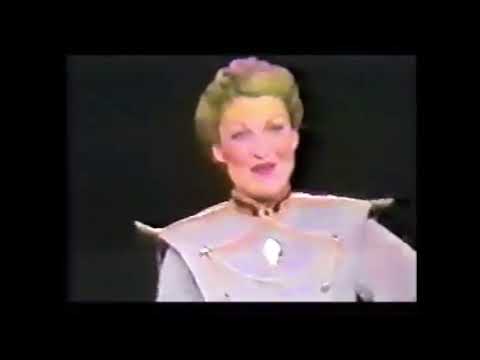
Because this is a stage musical rather than a film, the album doesn’t come with fixed timestamps the way a movie soundtrack does. Still, certain numbers consistently anchor key moments in most productions, and the recording mirrors that dramatic spine. Below are some of the standout tracks and the scenes they typically score.
“Just Go to the Movies” (music & lyrics by Jerry Herman)
- Where it plays:
- Early in Act I, the Grauman’s ushers step out from their posts and address the audience directly, pitching the cinema as a cure-all for everyday troubles. In many stagings this serves as the show’s de facto opening rally: house lights fade, marquee bulbs glow, and the ushers launch into a brisk, tap-driven production number that welcomes you into the Golden Age of Hollywood. The number often returns in shortened reprise or musical tags as a framing device later in the first act.
- Why it matters:
- On the album, it’s the thesis statement. Herman’s melody is built like a classic movie-musical anthem, but the lyrics slyly acknowledge how escapism papers over real problems. As a track, it’s a perfect sampler of the show’s tone — joyous, fizzy, slightly knowing — and a natural audition cut for belters who want old-school Broadway with a meta twist.
“Famous Feet” (Frank Lazarus / Dick Vosburgh)
- Where it plays:
- This number usually appears soon after the opening, when the ushers focus on the cement footprints outside Grauman’s Chinese Theatre. Onstage it becomes a full-scale tap routine, with the company literally dancing through the history engraved in the forecourt. Some productions have actors mime tracing the signatures and stepping into the imprints while the ensemble name-checks stars and films; others stage it more abstractly as a swirl of tap patterns echoing famous screen dancers.
- Why it matters:
- On record, you obviously lose the footwork, but you still get the intricate rhythmic writing and the sense of Hollywood history collapsing into a single chorus line. It’s one of the tracks where you can hear Tommy Tune’s choreography in the vocal phrasing — the accents, the push-and-pull of tempo — even though you can’t see a single wing or time step.
“I Love a Film Cliché” (Frank Lazarus / Dick Vosburgh)
- Where it plays:
- Midway through the Hollywood act, an usher or small group typically steps forward to catalogue every melodramatic trope the movies ever taught us: lovers parting at train stations, villains twirling mustaches, last-minute reprieves on the gallows. The staging often plays like a revue sketch, with other cast members popping in and out to demonstrate each cliché in miniature tableau while the singer keeps the patter rolling.
- Why it matters:
- This is the album’s purest comedy song. The patter writing invites razor-sharp diction, and the tune lands somewhere between music-hall spoof and genuine affection. On headphones, it’s a miniature masterclass in how the show critiques Hollywood sentimentality while clearly adoring it.
“Doin’ the Production Code” (Frank Lazarus / Dick Vosburgh)
- Where it plays:
- Later in Act I, just as the Grauman’s staff have thoroughly sold you on movie magic, they pull back the curtain and sing about the Hays Office rules that governed what you could actually show on screen. The number is usually staged as a brisk tap lecture: an usheress rattles off commandments about kisses, crime, and morality while the ensemble punctuates every prohibition with choreography that cheekily violates it.
- Why it matters:
- The song was showcased at the Tony Awards, and you can hear why: it’s witty, rhythmically sharp, and gives a featured performer a star entrance. On the album, it’s a standout for anyone who loves theatre that talks about its own censorship and guardrails — the upbeat swing underscores how people find joy even inside tight restrictions.
“A Night in the Ukraine” (Act transition / ensemble)
- Where it plays:
- This title song bridges the two halves of the show. Onstage, it often appears toward the end of Act I or at the top of Act II, introducing the Chekhov-meets-Marx premise and the new setting. The company pivots from tuxes and usher uniforms into caricatured Eastern European costumes, and the music shifts toward mock-operetta with a hint of film-score drama, signalling that we’ve left Hollywood and dropped into a black-and-white Eastern European
movie
. - Why it matters:
- On the recording, this is where the cast album changes genre mid-stream. The orchestration nods to old movie melodramas, and the choral writing sets up the recurring musical motifs that run through the whole Ukraine act, so it’s worth listening closely even if you’re mainly there for the comedy songs that follow.
“Samovar the Lawyer” (Frank Lazarus / Dick Vosburgh)
- Where it plays:
- Early in the Ukraine act, the character of Serge B. Samovar strides in — the show’s Groucho surrogate — to explain who he is and why he’s come to collect a debt from the widow Mrs. Pavlenko. The song usually functions as his entrance aria: he spars with the household staff, tosses off legal puns, and makes it clear that this is a Marx Brothers world where the wisecracking outsider controls the scene.
- Why it matters:
- The track is the comic engine of Act II. It gives the Samovar actor a chance to show off breathless patter, mock gravitas and sly asides to the audience, and it firmly plants the show in Marxian territory. On the album, it’s also one of the clearest examples of how Lazarus writes character-specific music that still sounds like part of a cohesive score.
“Just Like That” (Frank Lazarus / Dick Vosburgh)
- Where it plays:
- Somewhere in the middle of the Ukraine act, romantic complications bubble up between Nina and Constantine.
Just Like That
is typically staged as their moment of quasi-sincere connection, with the farce temporarily dialled back. The scene often plays in Mrs. Pavlenko’s drawing room, with the two circling each other verbally before giving in to the inevitability of operetta romance. - Why it matters:
- On disc, this track gives your ears a breather from gags and tap-break energy. It leans into classic musical-comedy love-duet territory — sweeping phrases, suspended chords — and lets the performers show straight singing chops while still keeping a twinkle of parody.
“Again” (Frank Lazarus / Dick Vosburgh)
- Where it plays:
- Later in the act, Nina steps forward for what is usually staged as a solo reflection, turning over her tangled feelings about duty, attraction and the general absurdity of the situation. Staging tends to be simple: a chair, a small playing area, and the rest of the cast frozen or dimmed out while she sings to herself and, indirectly, to us.
- Why it matters:
- On the album,
Again
reads as the emotional centre of the Ukraine half. It’s one of the few moments where the show lets Chekhovian longing creep through the Marxian chaos, and a good vocalist can use the track to show range and subtlety beyond the high-energy ensemble comedy elsewhere.
“Natasha” (Frank Lazarus / Dick Vosburgh)
- Where it plays:
- Near the climax, Samovar launches into a song about an idealized woman named Natasha, often framed as a tall tale or mock-confession. In many productions, the staging allows him to play out multiple mini-scenes with different characters while returning to the refrain, blurring whether Natasha is real, invented, or just another excuse for a joke.
- Why it matters:
- Fans of the score often single this song out because it’s equal parts comic patter and unexpectedly wistful. On the album, it deepens Samovar beyond a one-joke Groucho clone, hinting that even the most chaotic clown has a myth or heartbreak he hides behind the punchlines.

Notes & Trivia
- The show is literally two one-act musicals sharing a title and a company: a Hollywood revue first, then a Marx Brothers–style Chekhov parody second. The album preserves that split by keeping the acts clearly separated in sequence.
- While Frank Lazarus and Dick Vosburgh are the primary writer–composer team, the score famously folds in 1930s Hollywood standards and a full Richard Whiting medley, turning Act I into a curated jukebox of studio history.
- Jerry Herman’s additional numbers, especially
Just Go to the Movies
andNelson
, escaped the show and now turn up in his song anthologies and the revue Showtune, which helps keep the album in circulation among cabaret and audition singers. - The original Broadway staging’s tap work, choreographed by Tommy Tune and Thommie Walsh, was so central that some listeners first encountered the show via televised performances of
Doin’ the Production Code
and then hunted down the cast recording. - The Ukraine act is loosely based on Chekhov’s The Bear, but the album leans hard into film-score and vaudeville colours, so it never sounds like classical opera — more like a parody soundtrack for a 1930s Paramount farce that never existed.
- Because the score mixes well-known standards with originals, regional productions sometimes tweak song choices, but the Broadway-derived cast album remains the reference point most licensing houses use when they describe the material.
Reception & Quotes
On stage, A Day in Hollywood / A Night in the Ukraine earned nine Tony nominations and two wins, and critics routinely describe it as a rare, witty throwback that still plays as sharp entertainment. Regionally and Off-Broadway, the musical has developed a reputation as a connoisseur’s title: a tap-heavy, reference-rich piece that rewards companies with strong character comedians and dance chops.
The cast recording rides that reputation. Theatre nerds hunt it down for the Jerry Herman songs and the Marx Brothers pastiche; casual listeners often stumble on it via streaming platforms where it appears under the subtitle 1980 Winner of 2 Tony Awards
. Reviews of revivals frequently single out the score as the production’s secret weapon, praising how the songs both spoof and sincerely celebrate old Hollywood.
“A rare, witty treat” — regional critic on the musical’s homage to the golden age of cinema
“A musical bundle of joy” — review of a Winter Park Playhouse revival, noting how well the score lands with modern audiences
“Entertaining, funny, fluffy, great staging, clever” — summary of audience responses in an Off-Broadway limited run
“Nostalgia done right: the songs remember what we loved about Hollywood while showing us the strings being pulled” — commentary from a contemporary musical-theatre podcast
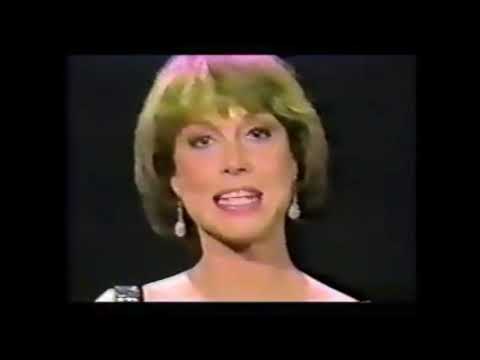
As for availability, the album exists in multiple formats. The original Broadway cast recording was issued on LP and later CD, and is now widely available as a 13-track, roughly 54-minute digital album on major streaming and download services, typically credited to Allen Cohen and DRG Records. For a niche title, that’s relatively luxurious treatment.
Interesting Facts
- The musical sparked a high-profile legal battle with the Marx Brothers’ heirs over rights of publicity; the ultimate court ruling favoured the producers and is still cited in entertainment-law casebooks.
- Composer Frank Lazarus originally trained as a solicitor before turning to acting and musical theatre writing, which gives a neat meta-twist to Samovar, the wisecracking lawyer at the heart of the Ukraine act.
- The show’s journey ran from a tiny Hampstead venue to the West End to a 17-month Broadway run, making this cast album an aural snapshot of a genuine word-of-mouth success.
- Off-Broadway and regional revivals keep popping up: from Winter Park Playhouse to J2 Spotlight and numerous university productions, often using the album as a teaching tool for tap and comedy timing.
- Several songs from the score, especially
Natasha
, have become cult favourites in Marx Brothers fan circles, where listeners relish how the lyrics channel Groucho-style patter through a Chekhovian plot. - The cast album’s mix of public-domain standards and newly written material makes it a handy playlist for anyone wanting a crash course in what 1930s Hollywood songs actually sounded like alongside modern pastiche.
- Because the show only uses eight performers to play a whole studio’s worth of stars, many listeners treat the recording as a masterclass in ensemble character work and doubling.
Technical Info
- Title: A Day in Hollywood / A Night in the Ukraine (Original Broadway Cast Recording)
- Year (stage premiere / Broadway): 1979 West End; 1980 Broadway
- Primary recording release: Original Broadway cast album, later issued on CD and digital (notably a 1991 DRG Records release running approximately 54 minutes)
- Type: Original Broadway cast recording of a two-act musical revue/farce
- Composers: Frank Lazarus (principal composer); additional songs by Jerry Herman; numerous interpolated 1930s film songs by Richard A. Whiting, Harold Arlen, Hoagy Carmichael and others
- Lyrics & Book: Dick Vosburgh
- Music supervision / recording direction: Album supervised and conducted within the original Broadway production’s musical framework (credits vary slightly by edition, but are tied to the Broadway creative team)
- Original Broadway direction & choreography: Directed and co-choreographed by Tommy Tune, with Thommie Walsh as co-choreographer
- Principal Broadway cast (selected): David Garrison, Priscilla Lopez, Frank Lazarus, Peggy Hewett, Kate Draper, Albert Stephenson, Stephen James
- Release context: Broadway run at the John Golden Theatre from May 1, 1980, later transferring to the Royale Theatre and closing in 1981 after 588 performances
- Label: DRG Records (notable LP, CD and digital releases); various regional LP pressings also exist
- Album status: Widely available on major streaming services and digital stores; physical copies circulate primarily via reissues and collectors’ markets
- Awards connection: The Broadway production won two Tony Awards (including choreography) and was nominated for nine; the album is frequently marketed with that accolade on its cover copy
- Selected notable placements (within the show):
Just Go to the Movies
as an early Hollywood act showpiece;Doin’ the Production Code
as a tap-driven satire of censorship;Samovar the Lawyer
,Just Like That
,Again
andNatasha
as key songs structuring the Ukraine act’s farce and romance beats
Key Contributors
| Subject | Relation | Object |
|---|---|---|
| Dick Vosburgh | wrote book and lyrics for | A Day in Hollywood / A Night in the Ukraine (stage musical) |
| Frank Lazarus | composed principal music for | A Day in Hollywood / A Night in the Ukraine |
| Jerry Herman | contributed additional songs to | A Day in Hollywood / A Night in the Ukraine, including Just Go to the Moviesand Nelson |
| Tommy Tune | directed and co-choreographed | the 1980 Broadway production of A Day in Hollywood / A Night in the Ukraine |
| Thommie Walsh | co-choreographed | the Broadway production alongside Tommy Tune |
| DRG Records | released | the Original Broadway Cast Recording of A Day in Hollywood / A Night in the Ukraine on LP, CD and digital platforms |
| Concord Theatricals | licenses | stage productions of A Day in Hollywood / A Night in the Ukraine for professional and amateur companies |
| New End Theatre (Hampstead) | hosted the premiere of | A Day in Hollywood / A Night in the Ukraine in late 1978 |
| Mayfair Theatre (West End) | presented West End transfer of | A Day in Hollywood / A Night in the Ukraine in 1979 |
| John Golden Theatre (Broadway) | opened Broadway run of | A Day in Hollywood / A Night in the Ukraine on May 1, 1980 |
| Royale Theatre (Broadway) | received transfer of | the Broadway production later in 1980 |
| Original Broadway Cast | performed on | the cast recording of A Day in Hollywood / A Night in the Ukraine that this guide discusses |
Questions & Answers
- Is there a complete cast recording of A Day in Hollywood / A Night in the Ukraine?
- Yes. The core Broadway score is preserved on an official cast album, issued on LP and CD and now widely available as a 13-track digital release credited to Allen Cohen and DRG Records.
- How different is the cast album from seeing the musical live?
- Like most cast recordings, it focuses on songs and key musical sequences. You lose some book scenes, dance breaks and visual gags, but the structure of the two acts and the main character beats are clearly represented.
- Which songs from the album are most popular for auditions and cabaret?
- Singers often gravitate to
Just Go to the Movies
,Nelson
,Again
andNatasha
. They offer strong narrative arcs in two to three minutes and sit comfortably in classic musical-theatre vocal ranges. - Is the score practical for smaller theatres with limited musicians?
- Yes. The show was written for a relatively lean pit and a cast of eight, so the orchestrations recorded on the album adapt well to reduced ensembles and even piano-only setups.
- Does the humour on the album feel dated today?
- Some jokes rely on 1930s film knowledge, but recent revivals have shown that the combination of sharp lyrics, tap energy and Marx Brothers chaos still lands — especially when performers lean into the self-aware, tongue-in-cheek tone you hear on the recording.
Sources: Wikipedia; Concord Theatricals; Internet Broadway Database; Discogs; Apple Music; Spotify; Ovrtur musical-theatre database; StageAgent; regional and Off-Broadway production reviews; musical-theatre reference books and articles on the show.