
Aida Lyrics: Song List
- Act 1
- Overture
- Every Story Is a Love Story
- Fortune Favors the Brave
- Past Is Another Land
- Another Pyramid
- How I Know You
- My Strongest Suit
- Fortune Favors the Brave (Reprise)
- Enchantment Passing Through
- My Strongest Suit (Reprise)
- Dance of the Robe
- Not Me
- Elaborate Lives
- Gods Love Nubia
- Act 2
- Step Too Far
- Easy as Life
- Like Father, Like Son
- Radames' Letter
- Dance of the Robe (Reprise)
- How I Know You (Reprise)
- Written in the Stars
- I Know the Truth
- Elaborate Lives (Reprise)
- Enchantment Passing Through (Reprise)
- Every Story is a Love Story (Reprise)
About the "Aida" Stage Show
TL;DR: Opera by Verdi, Aida, was the basis for this magnificent musical, based on the book by Linda Woolverton. Music written by genius Elton John, Tim Rice wrote the lyrics. The influence of Elton John is recognizable in songs of the set, especially in the My Strongest Suit. The production of musical opened on Broadway in 2000. The director is Robert Falls and Wayne Cilento was responsible for the choreography. Only 4 years later production was completed, during which the 1852 plays were made – a very decent quantity.
This production is the second for Broadway by Elton John and the first for which he wrote the music entirely from the beginning to the end. By collaborating with some people from the team of still going musical The Lion King by Disney, he made adaptive staging opera by Verdi in spirit of much closer to a fantastic spontaneity and magic, as Disney does, alienate it from initially gloomy tone of the opera Aida by Verdi.
Influence of Elton John felt not only directly in the songs, which are written with his highest skill, but also in how some actors try to use his vocal modulations to reach a climax in the songs (for example, Pascal does it in A Step Too Far song). Critics praised the performance of voice of Sherie Rene Scott, and H. Headley, who made great transitions between funny and sad melodies when necessary.
The scenery mesmerizes us with use of a large number of decorations that framed the scene measuring about 30 by 30 meters made with love to details and huge craftsmanship to recreate the spirit of ancient Egypt, which is hovering around, soaking the audience.
Release date of the musical: 2001
"Elton John and Tim Rice's Aida: Original Broadway Cast Recording" – Album Guide to Tracks and Key Scenes
Review
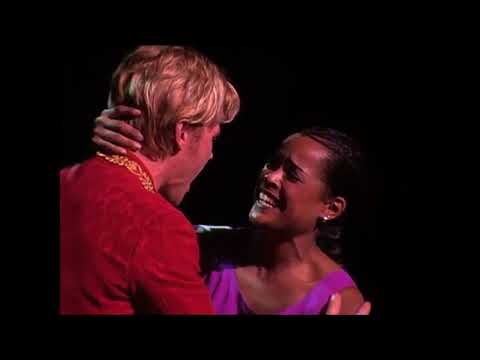
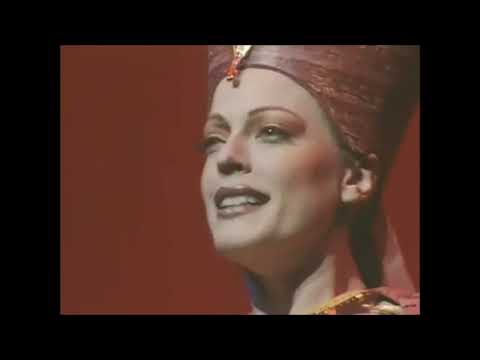
What if an arena-rock breakup album tried to tell an ancient tragic love story inside a modern museum? That is more or less what the Aida Original Broadway Cast Recording attempts, and, most of the time, it pulls it off. The album captures the show’s framing device — a contemporary couple locking eyes in a museum before the statue of Amneris sings them back into Ancient Egypt — and then rides that time-slip into a score full of swaggering military anthems, lush pop ballads and gospel walls of sound. Heather Headley’s Aida, Adam Pascal’s Radames and Sherie Rene Scott’s Amneris carve out a clear emotional arc in sound alone: from conquest and curiosity through impossible romance to sacrifice.
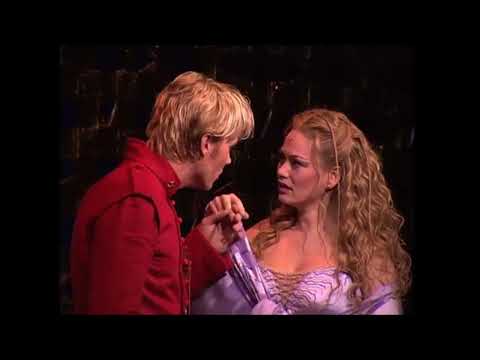
On disc, the plot tracks cleanly: Radames returns from war (“Fortune Favors the Brave”), Aida rails against captivity (“The Past Is Another Land”), Amneris hides her loneliness behind fashion-show gloss (“My Strongest Suit”), and the love triangle tightens until the devastating spirituals and duets of Act II. The album lives in contrasts — Nubian resistance versus Egyptian decadence, private doubts versus public display — and the arrangements lean into that friction. You can hear the love story straining against the politics in every modulation.
Stylistically, the recording is a deliberate patchwork. Rock-pop power ballads (“Elaborate Lives”, “Written in the Stars”) stand in for confession and destiny; Motown-flavored girl-group sparkle (“My Strongest Suit”) becomes the sound of Amneris’s armor and insecurity; reggae-inflected grooves (“Another Pyramid”) turn court corruption into a sly march; while gospel and African-inflected choral numbers (“Dance of the Robe”, “The Gods Love Nubia”) voice the Nubians’ collective memory and faith. It is less about historical authenticity and more about emotional coding — each style tells you exactly whose heart you are inside.
How It Was Made
The cast album sits on top of a surprisingly labyrinthine history. Disney originally developed Aida from Leontyne Price’s children’s book retelling of Verdi’s opera, with music by Elton John and lyrics by Tim Rice. A first iteration, titled Elaborate Lives: The Legend of Aida, tried out in Atlanta and Chicago before the show was reworked and retitled for its 2000 Broadway opening at the Palace Theatre. Along the way, the creative team — book writers Linda Woolverton, Robert Falls and David Henry Hwang — and director Robert Falls reshaped the story into the museum-framing, two-act pop musical captured on this recording.
Crucially, the Broadway cast album was not the first time these songs hit shelves. In 1999, Disney released a glossy “concept album” of Aida, with Elton John and a roster of pop and R&B stars (from the Spice Girls to Tina Turner) road-testing the score. That project functioned as both proof-of-concept and marketing. The 2000 Original Broadway Cast Recording, produced by Frank Filipetti, Paul Bogaev, Guy Babylon and Chris Montan for Walt Disney Records, pivots firmly back to theatre: it was recorded shortly after the show’s Broadway opening, and you can hear stage dynamics in the choral balance, drum sound, and the way dialogue bleeds into some intros.
The album’s production leans into a hybrid sound. Filipetti’s mix keeps Heather Headley’s vocals front and crystalline, while giving Adam Pascal’s rock-tenor edge room to rasp over a band that feels more arena than pit. Orchestration-wise, the score combines a traditional theatre band with synth pads, electric guitars and layered percussion, echoing Disney’s earlier The Lion King but with a glossier, late-90s pop sheen. The album went on to win the 2001 Grammy Award for Best Musical Show Album and was later certified Gold by the RIAA, underlining that, whatever critics thought of the staging, the score connected strongly with listeners.
Tracks & Scenes
This album is basically the show on disc, so you can map most tracks directly to specific scenes. Below are key numbers, how they function onstage, and why they matter when you listen at home.
“Every Story Is a Love Story” (Sherie Rene Scott)
- Where it plays:
- Act I prologue, in the contemporary museum. Amneris, now a statue, comes to life as tourists mill around Egyptian artifacts. Over the soft build of the song, time seems to dissolve; the lights warm from gallery cool to desert gold, and the faceless museum couple begin to echo Aida and Radames. Onstage the number is short, almost incantatory, but it’s the portal that tips us into Ancient Egypt.
- Why it matters:
- On the album this feels like an overture in miniature. It sets the theme — every love story repeats — and establishes Amneris as a retrospective narrator, which makes her Act II songs hit harder. It also showcases the score’s mix of pop-ballad intimacy with theatrical framing.
“Fortune Favors the Brave” (Adam Pascal & Company)
- Where it plays:
- Early Act I, as Radames and his Egyptian soldiers load spoils of war onto their Nile barge. The scene is all movement: red sails fly in, crates slam down, and the ensemble belts about glory and conquest. Radames struts and broods at the same time — he’s on the cusp of promotion and marriage, but already restless. The energy crashes just as the captured Nubian women, including Aida, are dragged aboard and the story’s moral counterweight arrives.
- Why it matters:
- It’s the first big “Elton stadium” moment, all drums and brass and high-belting tenor. On record, you hear Radames’ swagger but also his itch for “one more adventure,” which makes his later rebellion feel inevitable rather than sudden.
“The Past Is Another Land” (Heather Headley)
- Where it plays:
- Immediately after Aida’s capture, still on the ship, with the Nubian women in chains. While the Egyptians celebrate above, Aida stands apart and sings about leaving her homeland, blaming her own curiosity for their fate. The staging often isolates her in a single shaft of light as the ship creaks around her; the Nubian ensemble shadows her grief but lets her stand as their voice.
- Why it matters:
- This is Aida’s “I Am” song: proud, self-lacerating, determined. The album locks you into Headley’s vocal storytelling — the transition from steely chest voice to aching head voice tracks the character’s move from anger to acceptance of her responsibility.
“Another Pyramid” (John Hickok & Ministers)
- Where it plays:
- Still in early Act I, in the Egyptian court. Zoser, Radames’ father, outlines the Pharaoh’s failing health and his own scheme to speed up succession. The scene is busy with scribes, guards and courtiers, all swirling around Zoser as the set morphs into a geometric, almost industrial palace.
- Why it matters:
- The reggae-rock groove and sly rhythmic accents make villainy sound disturbingly fun. On the album, this track is your main window into the political thriller running underneath the romance, and it establishes Zoser as more than a cardboard bad guy.
“My Strongest Suit” (Sherie Rene Scott & Women of the Palace)
- Where it plays:
- Act I, in Amneris’s bedroom. Surrounded by dressers, stylists and racks of clothes, the princess turns choosing outfits into a full-blown fashion show. The number flips from a tongue-in-cheek runway parade to a party as the chorus vogues, spins, and literally piles garments on Amneris while Aida watches, half-amused, half-appalled.
- Why it matters:
- On disc it’s a fizzy Motown showstopper, but listen underneath the jokes: Amneris sings about clothes as armor. It’s our first hint that her confidence is performative, which makes her later vulnerability in “I Know the Truth” feel earned.
“Enchantment Passing Through” (Adam Pascal & Heather Headley)
- Where it plays:
- Mid–Act I, during an evening walk along the Nile. Radames sneaks Aida away from the palace, ostensibly to talk about travel and the world beyond Egypt’s borders. They trade stories and dreams; the blocking often has them moving in parallel lines, never quite touching, while lanterns and river ripples suggest a world they’ll never get to explore together.
- Why it matters:
- It’s the moment their chemistry becomes undeniable. On the album, the gentle groove and call-and-response phrasing make it sound like a duet between equals, not captor and captive — an important moral pivot in the storytelling.
“My Strongest Suit (Reprise)” (Sherie Rene Scott & Heather Headley)
- Where it plays:
- Later in Act I, back in Amneris’s chamber, after she confides her fear that her father is dying and the wedding feels like a trap. Aida helps her choose a garment, and the earlier anthem reappears as an intimate, slowed-down two-hander. The chorus disappears; it’s just two women sitting with fabric and fear.
- Why it matters:
- The reprise transforms a comic number into a friendship duet. On the album you can feel the temperature drop: suddenly “strongest suit” refers to emotional resilience rather than outfits, and Amneris stops being just comic relief.
“Dance of the Robe” (Heather Headley, Schele Williams & Ensemble)
- Where it plays:
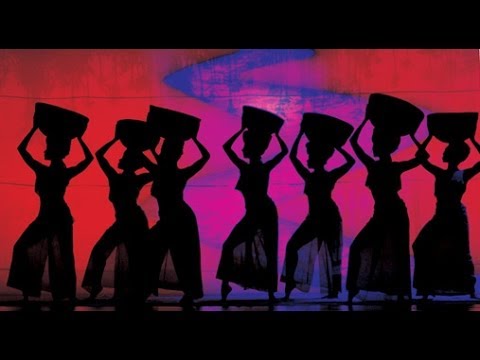
- Act I, in the Nubian slave camp. Mereb leads Aida to her people, who recognize her as their princess and demand leadership. What begins as Aida’s terrified confession — that she disobeyed her father and caused their capture — builds into a ritual dance, with robes swirling and drums pounding as the Nubians vow to keep their culture alive despite slavery.
- Why it matters:
- On record, it’s one of the clearest examples of the show’s “world music” ambitions. The choral writing and percussion give Aida a communal responsibility; it’s the track that frames her later romantic choices as political betrayals or acts of faith.
“Not Me” (Company)
- Where it plays:
- Late in Act I, along the Nile and the marketplace. As Radames distributes his own possessions to the Nubians at Aida’s urging, different characters step forward to sing about unexpected love and loyalty: Radames for Aida, Aida for him, Amneris for a friend who finally sees her, Mereb for his rediscovered princess. The staging often crosscuts between them, physically separated but emotionally in sync.
- Why it matters:
- On the album, this is the emotional montage song: a quartet of overlapping confessions that makes the impending disaster feel inevitable. It’s also a rare moment where generosity and romance align, musically tying together private feelings and public acts.
“Elaborate Lives” (Adam Pascal & Heather Headley)
- Where it plays:
- Immediately after “Not Me”, still by the Nile. Having given away his treasures, Radames finally confesses his love; Aida, torn between duty to Nubia and her feelings, gives in. Often the staging pares everything back — just the two of them, a tent flap, and water in the background — emphasizing how small their pocket of happiness is compared to the world closing in.
- Why it matters:
- It’s the show’s central love ballad, and the album treats it that way: long phrases, vocal fireworks, and a climax that feels like a key change and a moral leap. This is the track most listeners latch onto as the “heart” of the score.
“The Gods Love Nubia” (Heather Headley & Ensemble)
- Where it plays:
- Act I finale. News arrives that the captured king of Nubia is Amonasro — Aida’s father. Crushed, Aida thinks she has failed everyone. The Nubian slaves gather in a temple-like space, candles in hand, and Aida leads them in a gospel-inflected hymn about survival and faith. The choreography shifts from personal grief to collective praise, ending Act I on a note of defiant worship.
- Why it matters:
- On disc it’s the most overtly gospel track, and arguably the score’s spiritual and musical summit. It reframes the story beyond the love triangle: whatever happens to Aida and Radames, Nubia’s spirit is the real protagonist.
“A Step Too Far” (Sherie Rene Scott, Adam Pascal & Heather Headley)
- Where it plays:
- Act II opener. The stage splits between three bedrooms: Amneris, Radames and Aida. Each character lies awake, singing about their fears regarding love, duty and betrayal while sharing a single musical line. Lights and blocking weave them into a kind of emotional braid even though they never occupy the same physical space in the scene.
- Why it matters:
- On the album it plays like a perfect three-part pop ballad, but dramaturgically it’s a miniature Greek chorus. You hear the same melody carry three different internal monologues, making the triangle’s tensions painfully clear.
“Easy as Life” (Heather Headley)
- Where it plays:
- Early in Act II, usually at the edge of the palace or in a liminal space between Nubia and Egypt. Aida weighs the choice between saving her people and saving Radames, imagining life without the burden of love. The staging often isolates her against a vast backdrop — desert, stone, or sky — to underline how alone the decision is.
- Why it matters:
- On record it’s Aida’s power ballad: a big, anguished solo that lets Headley tear into the top of her range. Lyrically, it’s the dark mirror of “Elaborate Lives”, and many fans treat it as the show’s signature audition cut.
“Like Father, Like Son” (John Hickok & Adam Pascal)
- Where it plays:
- Mid–Act II, in Zoser’s domain. Zoser and his ministers pressure Radames to accept the throne and the war-friendly status quo, revealing the extent of Zoser’s poisoning of the Pharaoh. The choreography surrounds Radames with conspirators; he’s physically in the center and emotionally on the outside, horrified by what he’s inheriting.
- Why it matters:
- On the cast album this track sharpens Radames’ political arc. The aggressive, almost snarling groove shows how far he’s drifted from his father, and why his eventual betrayal of Egypt is also a rejection of a bloodline.
“Written in the Stars” (Adam Pascal & Heather Headley)
- Where it plays:
- Act II, late, usually in a secret meeting place — on a balcony, atop a wall or by the docks. Aida and Radames confront the reality that their love will likely destroy them and those they care about. There is talk of escape, of running away to start over, but the staging keeps pulling them back toward Egypt’s imposing architecture, reminding the audience that destiny and empire are not so easily dodged.
- Why it matters:
- The song also exists as a pop duet (Elton John & LeAnn Rimes) that charted outside the show, so it functions as both internal scene and external theme song. On the OBCR, the slightly rougher theatrical vocals give it greater urgency and make the fatalism feel less glossy.
“I Know the Truth” (Sherie Rene Scott)
- Where it plays:
- Very late in Act II, when Amneris finally grasps that Radames and Aida are in love and that her own relationship was partly an illusion arranged by politics. She usually stands alone in the temple or a corridor, stripped of her earlier fashion armor, singing directly to the audience or to an absent Radames.
- Why it matters:
- On disc this track is the payoff to every joke in “My Strongest Suit”. It’s a character suddenly doing emotional math out loud. The pop-ballad structure lets Amneris step into the musical spotlight and claim the role of tragic storyteller that she opened the show with.
“Elaborate Lives (Reprise) / Finale” (Company)
- Where it plays:
- Final scene, in the tomb where Aida and Radames are entombed together for treason. The staging often moves in slow motion: sand pouring, stone lowering, the lovers embracing as air runs out. The reprise starts softly, as a private recollection of their first declaration, then swells with the company as the show flashes forward to the modern museum couple.
- Why it matters:
- On the album, this reprises both the love theme and the framing conceit. The last chords blur past and present, suggesting that some stories echo across time — which is exactly what the cast album has done for the stage production.
Notes & Trivia
- The 1999 pop Aida concept album includes songs and artists not heard on the Broadway cast album, like “The Messenger” and guest turns from Janet Jackson, Shania Twain, Sting and the Spice Girls. The OBCR strips those out to document the stage score only.
- “Written in the Stars” effectively functioned as the show’s pop single; the Elton John/LeAnn Rimes version hit the U.S. Adult Contemporary charts and helped sell the story to listeners who might never see the musical live.
- During the Chicago try-out, a mishap with the suspended “tomb” set piece injured Heather Headley and Adam Pascal in the finale sequence, leading the production to restage the ending with the tomb safely grounded in later runs.
- Several songs existed in different versions during development — for example, the final death sequence once included a separate number called “The Messenger”, which survives only on the concept album and was cut before Broadway.
- Subsequent tours and international productions have tweaked song staging: in one authorized touring script revision, “My Strongest Suit” became less of a winking fashion show and more of an intimate dressing-room scene between Aida and Amneris, changing the feel of both song and character.
Reception & Quotes
On Broadway, Aida divided critics but found a substantial audience. Some reviewers dismissed the show as bombastic or dramatically thin, while others praised the performances and score. Commercially, the production ran for over four years and recouped its investment, helped by Disney branding and word of mouth for Heather Headley’s star-making turn.
The cast album, by contrast, has been consistently admired. It won the 2001 Grammy Award for Best Musical Show Album, and later reached Gold status in the U.S., marking over 500,000 units shipped. For many fans and theatre kids, this recording — not the live staging — was their primary gateway into the story and songs, particularly in regions that only later received touring or school productions.
The original cast recording marks a dramatic leap forward from the dreary mishmash concept album, thanks to the heat generated by its leads.– Editorial review
Disney scored a tremendous commercial hit with Aida; audiences flocked to this reworking of the classic Verdi opera.– Theatre history survey
Some found the musical a pompous bore onstage, but few could deny the power of Headley’s vocals preserved on disc.– Contemporary commentary
Four years running, the show garnered numerous awards, and its cast album left an indelible mark on musical theatre fans.– Educational overview
Today, the album sits in that “cult-classic” zone: maybe not as ubiquitous as The Lion King or Wicked, but fiercely loved by those who grew up belting “Easy as Life” in their bedrooms.
Interesting Facts
- Elton John and Tim Rice’s Aida won the Tony Award for Best Original Score, while Heather Headley won the Tony and Drama Desk for her performance — both wins heavily tied to what you hear on the cast album.
- The show’s choral standout “The Gods Love Nubia” has become a staple for show choirs, church groups and TV talent contests, often performed completely out of context from the musical.
- A planned “reimagined” revival, once slated to premiere at Paper Mill Playhouse in 2021, was cancelled amid the pandemic, but development continued abroad, including a newly updated Dutch production in 2023.
- Pop and R&B singers including Deborah Cox, Toni Braxton and Destiny’s Child’s Michelle Williams stepped into the title role during the Broadway run, bringing their own fanbases — many of whom discovered the full score through the cast recording.
- The album exists in several physical variants, including a palace-theatre-exclusive picture disc edition that has become a small collector’s item among Disney-on-Broadway fans.
- “My Strongest Suit” has popped up in other media; a cover was featured in the CW spin-off series Katy Keene, underscoring how the number works even detached from its original plot.
- Because of the museum framing device, the very first and very last sounds on the album belong to Amneris, making the whole recording feel like her long, sung memory.
Technical Info
- Title: Elton John and Tim Rice’s Aida: Original Broadway Cast Recording
- Year: 2000 (Broadway production opened March 23, 2000)
- Type: Original Broadway cast recording for stage musical
- Principal composers: Music by Elton John; lyrics by Tim Rice
- Book writers (stage source): Linda Woolverton, Robert Falls, David Henry Hwang
- Based on: The opera Aida by Giuseppe Verdi (libretto by Antonio Ghislanzoni), via Leontyne Price’s children’s-book retelling
- Key vocal leads (OBC): Heather Headley (Aida), Adam Pascal (Radames), Sherie Rene Scott (Amneris), John Hickok (Zoser), Damian Perkins (Mereb), Schele Williams (Nehebka)
- Producers (album): Frank Filipetti, Paul Bogaev, Guy Babylon, Chris Montan (Walt Disney Records)
- Label / release context: Walt Disney Records; released on CD in 2000 following the Broadway opening at the Palace Theatre
- Recording details: Recorded in New York with the Broadway company, with engineering and mixing led by Frank Filipetti to capture a hybrid of live-stage energy and studio polish
- Notable stylistic elements: Pop-rock ballads, reggae-inflected villain numbers, Motown-inspired diva song, gospel and African-influenced choral writing
- Selected notable placements (within the show): “Every Story Is a Love Story” (prologue), “Fortune Favors the Brave” (Radames’ war anthem), “Dance of the Robe” and “The Gods Love Nubia” (Nubian identity and resistance), “A Step Too Far” (three-way internal conflict), “Written in the Stars” (late Act II reckoning)
- Awards: Grammy Award for Best Musical Show Album (2001); part of a production that won the Tony for Best Original Score and other design awards
- Certifications: Certified Gold by the RIAA (over 500,000 units shipped in the U.S.)
- Label / album status: Widely available on CD, digital download and major streaming platforms; also issued in international pressings
- Stage licensing: Stage performance rights for the musical are administered by Music Theatre International (MTI), making the album a de facto reference for regional, school and amateur productions
- Related recordings: 1999 pop “concept album” Elton John and Tim Rice’s Aida; various international cast recordings (Dutch, German, Japanese, Hungarian)
Key Contributors
| Subject | Relation | Object |
|---|---|---|
| Elton John | composed the music for | Aida (musical) and the Original Broadway Cast Recording |
| Tim Rice | wrote the lyrics for | Aida (musical) and its cast album |
| Heather Headley | originated and recorded the role of | Aida on the Broadway cast album |
| Adam Pascal | originated and recorded the role of | Radames on the Broadway cast album |
| Sherie Rene Scott | originated and recorded the role of | Amneris on the Broadway cast album |
| Frank Filipetti | produced and engineered | the Original Broadway Cast Recording of Aida |
| Paul Bogaev | served as music supervisor/producer for | the Aida cast album and stage production |
| Chris Montan | executive-produced | Disney’s Broadway cast recording of Aida |
| Guy Babylon | co-produced and contributed keyboards to | the Aida cast recording |
| Linda Woolverton, Robert Falls, David Henry Hwang | wrote the book for | Aida (musical), which the cast album documents in song form |
| Disney Theatrical / Hyperion Theatricals | produced the Broadway production of | Aida at the Palace Theatre |
| Walt Disney Records | released | Elton John and Tim Rice’s Aida: Original Broadway Cast Recording |
| Palace Theatre (Broadway) | hosted the original run of | Aida, whose company recorded this album |
Questions & Answers
- Is the Aida Original Broadway Cast Recording a rock musical album or a traditional show-tune album?
- It’s very much a hybrid. The bones are classic Broadway — character songs, reprises, act finales — but the surface is late-90s Elton John: electric guitars, drum loops, gospel choirs and radio-ready ballads. If you like both cast albums and adult-contemporary pop, this sits right in the middle.
- How is this cast album different from the 1999 Aida concept album?
- The concept album is a studio project with pop and R&B stars reimagining the songs; it includes material that never made it to Broadway, and arrangements tailored for radio. The Original Broadway Cast Recording documents the show as performed onstage, with the theatre orchestrations, full ensemble, and final song order, and without some of the concept-only tracks.
- Do I need to know Verdi’s original opera to follow the story on the album?
- No. The cast recording stands on its own. You’ll catch more parallels and ironies if you know Verdi’s Aida, but the album’s lyrics and sequencing make the love triangle, political stakes and ending pretty clear even without operatic background.
- What are the best audition cuts from this album for different voice types?
- For a powerhouse belt, “Easy as Life” or “The Gods Love Nubia” are go-to choices; for a more pop-rock tenor, “Fortune Favors the Brave” or “Elaborate Lives” work well. Mezzos and sopranos often reach for “I Know the Truth” or “Every Story Is a Love Story” when they want something both contemporary and character-driven.
- Is there a new Aida production or revival that uses this score?
- The core score remains the same, but recent and planned revivals have explored script and staging tweaks. A major U.S. reimagining slated for 2021 was cancelled, while a newly updated Dutch production in 2023 introduced fresh visual concepts and minor book adjustments while still drawing on the familiar songs you hear on this album.
Sources: Wikipedia – Aida (musical); Disney Musical Wiki; Disney Wiki; EltonJohn.com discography; AllMusic – Aida [Original Broadway Cast]; Playbill news archive; RIAA/Playbill cast-album sales survey; Study.com synopsis of Aida; StageAgent overview; Musical Cyberspace analysis; New York Post and other contemporary reviews.