
Crazy For You Lyrics: Song List
- Act 1
- Overture
- K-Ra-Zy for You
- I Can't Be Bothered Now
- Bidin' My Time
- Things Are Looking Up
- Could You Use Me?
- Shall We Dance?
- Entrance to Nevada
- Someone to Watch over Me
- Slap That Bass
- Embraceable You
- Tonight's the Night
- I Got Rhythm
- Act 2
- Entr'acte
- Real American Folk Song
- What Causes That?
- Naughty Baby
- Stiff Upper Lip
- They Can't Take That Away from Me
- But Not for Me
- New York Interlude/Nice Work If You Can Get it
- Bidin' My Time (French Reprise)
- Finale
About the "Crazy For You" Stage Show
Mike Ockrent, not a new comer to the theatrical business, was director of this musical, and Susan Stroman did choreography (one of hers famous works is a dance show Contact, where she did both as director and choreographer). Preview was decided to hold in Washington, D. C., and, ten exhibitions after, it moved to Shubert Theatre and featured tremendously successful 1622 plays. The actors were as follows: J. Connell, P. Fodor, J. Benson, A. White, H. Groener, S. Temperley, B. Adler, R. Carroll, J. Hillner, B. Leavel & M. Pawk.
Angel Records was a record company that released the soundtrack on a CD.
After its arrival in the West End, where the director was the same Mike Ockrent, and the choreography was performed again by Mrs. Susan, it also became very successful, hanging there for about 3 years, from March 1993. Its new production started in 1999 by PBS, under the direction of Matthew Diamond. He was nominated for Emmy for this work. 2009 was marked by the production under the direction of Katherine Hare. Responsible for choreography was R. Plews, a rental company was Eyebrow Productions that staged it in London.
Subsequent productions of the musical were: its renewal in 2001, on the West End, where it lasted until March 2012 at Novello Theatre; Upstairs At The Gatehouse in London took the play in same 2012, during the winter season, until January 2013. The final production adopted only six major actors, instead of a large ensemble, as it was accepted normally for the show during its previous hits.
In 2015, the musical was shown in High School Musical Theatre.
Release date of the musical: 1992
"Crazy for You" – The Musical Guide & Song Meanings
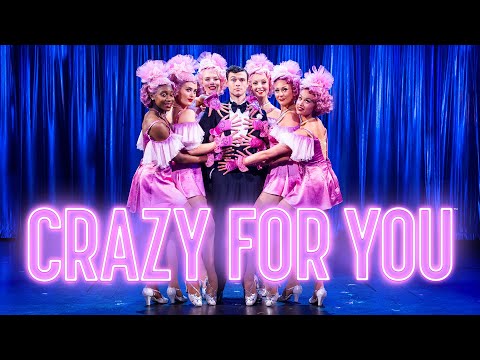
A musical made of standards, and somehow still a plot engine
How do you make a jukebox of immortal songs feel like a single character’s heartbeat? "Crazy for You" answers by turning performance into the story’s central problem. Bobby Child is not just a guy who loves theatre. He is a guy who needs theatre to lie convincingly, to survive socially, and then to tell the truth when the lie collapses. The lyrics do the heavy lifting because Ira Gershwin’s language is built for pivoting: flirtation that pretends to be casual, bravado that hides panic, and heartbreak that refuses to sound grandiose even when the melody begs for it.
Musically, it lives in the bright grammar of classic American song: swing, foxtrot sheen, ballads that arrive like a held breath, and dance breaks that are not decoration but narrative proof. When the town learns to move together, the words stop being private jokes and become civic electricity. That is the show’s trick. It sells you romance, then quietly insists the deeper love story is a community re-learning how to play.
How it was made
The project began as a desire to revisit "Girl Crazy," then drifted into a new piece with a new book, because the producers wanted sturdier storytelling than the original could offer. Ken Ludwig was brought in to rewrite, with Mike Ockrent directing and Susan Stroman shaping the evening’s dance identity. The creative shift mattered: once you treat songs as story, you start auditioning the catalogue for narrative function, not just fame.
There is also a very practical, very theatrical reason this score feels oddly fresh for a compilation. In the early 1980s, a large cache of Gershwin material was discovered in a Warner Bros. music warehouse in Secaucus, New Jersey. That discovery fed the creators’ search process and helped surface songs that had been unheard or long out of circulation, letting the show blend famous standards with numbers that sound like newly opened drawers in a familiar desk. The result is a musical that can land a laugh on a rhyme you did not know existed, then follow it with a chorus the whole world already owns.
Key tracks & scenes
"K-ra-zy for You" (Bobby Child)
- The Scene:
- Backstage at the Zangler Theatre in 1930s New York. Work lights. The last show of the season is over, the air still warm with powder and sweat. Bobby auditions too hard, too loudly, and the room contracts around him.
- Lyrical Meaning:
- This is infatuation as self-introduction. The lyric is a sales pitch that keeps tripping over its own sincerity, which is the point. Bobby wants the theatre to love him back, and he has not yet learned the difference between charm and need.
"I Can't Be Bothered Now" (Bobby Child and the Follies Girls)
- The Scene:
- Bobby’s mother pushes him toward duty. The stage snaps into a fantasy: spotlight glamour, chorus-line precision, bodies forming patterns like a private movie. Reality keeps trying to interrupt; Bobby refuses.
- Lyrical Meaning:
- The words are a defense mechanism. The lyric is all shrug and sparkle, but it reads like a young man practicing emotional anesthesia. He is rehearsing how to look untouched, because untouched looks powerful.
"Someone to Watch Over Me" (Polly Baker)
- The Scene:
- Deadrock, Nevada. The theatre is a memory with a roof. Polly is alone in a pool of warm light, the rest of the space falling away into dust and dark.
- Lyrical Meaning:
- The lyric’s tenderness is also a demand for safety. In a town that has run out of options, romance is not a fantasy. It is a resource. The simplicity of the language makes the loneliness feel specific, not poetic.
"Slap That Bass" (Bobby and Company)
- The Scene:
- A rehearsal that is going nowhere. Then Bobby, disguised as producer Bela Zangler, resets the room. Brighter light. Faster tempo. Miners and showgirls start moving as if the floor suddenly has rules.
- Lyrical Meaning:
- The lyric is instruction disguised as celebration. It is about rhythm, but also about obedience to joy. Bobby’s con becomes a gift: he teaches the town a language that gets results, and the words push bodies into belief.
"Embraceable You" (Polly and Bobby)
- The Scene:
- Polly falls for the persona, not the man. Soft spotlight. A romantic frame that is slightly wrong because it is built on mistaken identity, yet emotionally correct because both of them are starving for escape.
- Lyrical Meaning:
- Ira Gershwin’s lyric makes desire sound conversational, almost shy, which lets the scene play as comedy and ache at the same time. The words say “hold me,” but the subtext says “tell me I am not stuck here.”
"I Got Rhythm" (Polly and Company)
- The Scene:
- Opening night with almost no audience. The number erupts anyway. Big stage pictures, hard-edged light, and the town moving like it has remembered its own pulse.
- Lyrical Meaning:
- This lyric is triumph by inventory. I have this, I have that, I do not need you. In context, it becomes communal therapy: the town lists what it still possesses, and the list becomes a future.
"What Causes That?" (Bobby Child and Bela Zangler)
- The Scene:
- Act II, the saloon. Two men in the same costume, both nursing bruised pride. They move like mirror images, reflections that cannot agree on which one is real. The comedy is crisp; the sadness is close behind it.
- Lyrical Meaning:
- The lyric treats heartbreak like a medical mystery, which is funny until it is not. It exposes how these men process pain: by turning it into a routine, a bit, a number they can control.
"They Can't Take That Away from Me" (Bobby Child)
- The Scene:
- After the deception collapses, Bobby tries honesty without decoration. Cooler lighting. Fewer bodies onstage. The melody steadies him while the lyric names details he is afraid to lose.
- Lyrical Meaning:
- This is memory as contract. The language is plain, almost stubborn, and that stubbornness becomes character growth. Bobby finally values something he cannot buy and cannot direct, which is why it matters.
Live updates
The show’s most visible recent high-profile staging was the Susan Stroman-directed revival that began at Chichester Festival Theatre in 2022 and transferred to London’s Gillian Lynne Theatre, officially opening on July 3, 2023 after previews from June 24. Playbill reported that Ken Ludwig revised the book for the London run, adding contemporary touches and trimming the runtime by about 15 minutes, with Charlie Stemp as Bobby and Carly Anderson as Polly.
In the U.S., one of the notable upcoming professional runs on the calendar is Goodspeed Musicals in East Haddam, Connecticut, scheduled for June 19 through August 9, 2026, with directing by Michael Fling, choreography by Kelli Barclay, and music direction by Adam Souza.
On the regional and community circuit, "Crazy for You" remains a tap-heavy favorite because it scales well and audiences recognize the melodies fast. Examples on public listings include a Scottsdale run at Don Bluth Front Row Theatre from September 5 to October 17, 2025 with tickets listed in the $34 to $40 range, plus a June 2026 production in Edmonton with published audition and performance dates.
Notes & trivia
- The show was conceived as a rethink of "Girl Crazy," then rebuilt into a new story with access to the wider Gershwin catalogue.
- A cache of Gershwin materials discovered in a Warner Bros. music warehouse in Secaucus, New Jersey helped supply lesser-known songs alongside standards.
- Los Angeles Times reporting from 1993 described the creators testing many options per slot, selecting songs to fit specific moods and story needs.
- The Act II mirror-like staging for "What Causes That?" is frequently linked to Marx Brothers-style physical comedy, and a major 2022 review highlighted that influence explicitly.
- The original Broadway run opened February 19, 1992 at the Shubert Theatre and played 1,622 performances.
- The 1992 original Broadway cast recording was released in the U.S. on May 19, 1992 on Broadway Angel, with Paul Gemignani conducting and William David Brohn credited for orchestration on the recording metadata.
- For TV viewers, a filmed production from Paper Mill Playhouse aired on PBS "Great Performances" (announced for national broadcast in 1999), widening the show’s afterlife beyond stage-only fandom.
Reception
Critics tend to agree on one core point: this is a dance musical with a lyric brain. When it works, it feels young without pretending it is modern. When it fails, it usually fails because the plot is feather-light and the evening asks you to accept that as part of the deal.
“Makes everything old seem young again, the audience included.”
“Such infectious fun... Crazy For You brought musical comedy back”
“The crowning glory is the choreography - a whirligig of tap, ballroom, chorus-line and balletic movement.”
Quick facts
- Title: Crazy for You
- Broadway year: 1992
- Type: Musical comedy using songs by George and Ira Gershwin
- Music: George Gershwin
- Lyrics: Ira Gershwin
- Book: Ken Ludwig (co-conceived with Mike Ockrent)
- Based on: Material connected to the 1930 musical "Girl Crazy"
- Original Broadway opening: February 19, 1992 (Shubert Theatre, New York)
- Notable song placements: “Someone to Watch Over Me” (Polly’s loneliness), “Slap That Bass” (rehearsal breakthrough), “I Got Rhythm” (Act I celebration), “They Can’t Take That Away from Me” (Bobby’s vow)
- Cast recording: 1992 Original Broadway Cast, released May 19, 1992 (Broadway Angel); widely available on major streaming platforms
- Recent major revival visibility: Chichester 2022, West End transfer opening July 3, 2023
- Upcoming highlighted run: Goodspeed Musicals (June 19 to August 9, 2026)
Frequently asked questions
- Where can I read the full lyrics?
- Full lyrics are best accessed through authorized sheet music, vocal selections, and licensed songbooks from official rights holders and publishers. Many recordings also include lyric booklets depending on edition.
- Is this a jukebox musical?
- Functionally, yes. The show is built from existing Gershwin songs, but the book is designed to make them behave like plot scenes, not concert turns.
- What is the story in one sentence?
- A New York banking heir sent to foreclose on a Nevada theatre pretends to be a famous producer, accidentally revives a town, and finally learns how to stop acting when it counts.
- What recording should I start with?
- The 1992 Original Broadway Cast recording is the baseline because it captures the show at launch and preserves the Broadway vocal casting style of the era.
- Is there a movie version?
- There is no feature film adaptation, but a filmed stage version exists through PBS “Great Performances,” sourced from a major regional revival.
- Why does “I Got Rhythm” feel like the thesis?
- Because the lyric turns confidence into a checklist, and the staging often turns that checklist into group choreography. It is personal optimism that becomes public motion.
Key contributors
| Name | Role | Contribution |
|---|---|---|
| George Gershwin | Composer | Music across the score, ranging from show tunes to film songs shaped into a single evening. |
| Ira Gershwin | Lyricist | Lyrics that balance conversational comedy with ache, allowing songs to pivot cleanly inside scenes. |
| Ken Ludwig | Book writer | Built the mistaken-identity engine that makes standards land as story beats; later revised the book for the London revival. |
| Mike Ockrent | Co-conceiver / Director (original Broadway) | Helped define the show’s classic-comedy pacing and narrative approach to integrating the catalogue. |
| Susan Stroman | Choreographer (original) / Director-Choreographer (recent revival) | Made dance a narrative language, with tap and ensemble patterns functioning like dialogue. |
| Paul Gemignani | Musical direction / Conductor (cast recording credit) | Anchored the cast-recording sound in Broadway precision and idiomatic Gershwin phrasing. |
| William David Brohn | Orchestrator (recording credit) | Orchestration work credited on the 1992 cast recording metadata, shaping the album’s brass-and-strings Broadway profile. |
| Broadway Angel | Label | Released the 1992 Original Broadway Cast recording, a key entry point for listeners. |
Sources: Concord Theatricals, Goodspeed Musicals, Playbill, The Guardian, Los Angeles Times, Gershwin.com, MusicBrainz, KenLudwig.com, IMDb, BroadwayWorld.