
Into the Woods Lyrics: Song List
- Act 1
- Prologue: Into the Woods
- Cinderella at the Grave
- Hello, Little Girl
- I Guess This Is Goodbye / Maybe They're Magic
- I Know Things Now
- Very Nice Prince / First Midnight / Giants in the Sky
- Agony
- It Takes Two
- Stay With Me
- On the Steps of the Palace
- Ever After
- Act 2
- Act II Prologue: So Happy
- Agony (Reprise)
- Lament
- Any Moment / Moments in the Woods
- Your Fault / Last Midnight
- No More
- No One Is Alone
- Finale: Children Will Listen
About the "Into the Woods" Stage Show
Release date of the musical: 1987
“Into the Woods” – The Musical Guide & Song Meanings
Into the Woods sells you wishes, then makes you live with the invoice
In 1987, Stephen Sondheim and James Lapine delivered a musical that looks like a bedtime story and behaves like a courtroom transcript. Into the Woods starts as a clever mash-up of familiar Grimm plots, then turns, in Act II, into a public reckoning about blame, parenting, grief, and what people do when “happily ever after” stops paying rent. The score’s secret weapon is its lyrical point of view: it never lets any character keep the moral high ground for long.
Sondheim’s lyrics here are built like arguments. They set up a desire, flip it, then pin the character to the consequences with a rhyme that lands like a gavel. He writes in clean, conversational syntax, but the craft is surgical: repeated phrases become traps, and the show’s most comforting lines often arrive with a quiet warning label. That is why the final stretch hits so hard. The words get simpler, almost childlike, because the show has stripped away the fantasy defenses.
Musically, the writing is a map of thinking patterns. The Baker and his Wife sing like two adults negotiating logistics and intimacy at the same time. The Witch sings like a sermon that keeps cracking into pain. The Princes sing like parody that slowly reveals its own emptiness. If you are listening to the cast album, pay attention to how often songs behave like scenes with a pulse rather than “numbers.” This is a musical where the lyric is staging.
Listener tip: do not shuffle. Listen in order through “Your Fault” and “Last Midnight.” That sequence is the show’s ethical engine, and it only works if you feel the dominoes fall.
How it was made: a scrapped quest, a better idea, and a fairy tale that grew teeth
Lapine and Sondheim initially tried writing an original quest-style fairy tale, then abandoned it. The sharper solution was Lapine’s: braid together multiple well-known tales, and use the Baker and his Wife as the glue that forces collisions. The show first took shape at San Diego’s Old Globe in 1986 before opening on Broadway at the Martin Beck Theatre on November 5, 1987. Even during the run, text and musical details kept evolving, a reminder that this “classic” was once a moving target.
The best behind-the-scenes anecdote is philosophical: Lapine has said he resisted the idea at first because fairy-tale characters can feel unshaded, too cleanly “good” or “bad.” That resistance is audible in the finished work. The show’s entire project is to complicate the archetypes without flattening their theatrical punch. It is not a satire of fairy tales. It is an audit of what we ask fairy tales to do for us.
Key tracks & scenes
“Prologue: Into the Woods” (Company)
- The Scene:
- We meet three households at the edge of a forest: Cinderella in servitude, Jack with a failing cow, and the Baker and his Wife with a curse. The stage picture is domestic, busy, and slightly compressed, as if everyone is already late.
- Lyrical Meaning:
- Every character gets a wish and a rule. The lyric’s brilliance is that it makes “wanting” sound ordinary, then quietly suggests wanting is dangerous when you refuse to imagine the next step.
“Hello, Little Girl” (Wolf, Little Red Ridinghood)
- The Scene:
- The Wolf intercepts Little Red on her path through the woods. Staging often plays this as flirtation that turns predatory mid-phrase, with the forest suddenly feeling closer.
- Lyrical Meaning:
- The lyric is charm as strategy. It is a lesson in how danger talks when it wants you to lower your guard, and how innocence can confuse attention for safety.
“Giants in the Sky” (Jack)
- The Scene:
- Jack returns from above with breathless detail, describing a world that is larger, richer, and more thrilling than the one below. He performs discovery like a victory lap.
- Lyrical Meaning:
- This is the show’s purest rush of aspiration. The lyric celebrates wonder while sneaking in the show’s central warning: the higher you climb, the more you can break when you fall.
“Agony” (Cinderella’s Prince, Rapunzel’s Prince)
- The Scene:
- Two Princes compete in romantic misery, performing heroism as if it is a sport. The staging usually leans operatic and ridiculous, a mirror held up to entitlement.
- Lyrical Meaning:
- The lyric is comedy with a knife. It mocks the language of noble suffering, then hints at the selfishness underneath it. Their “pain” is mostly boredom with getting what they want too easily.
“It Takes Two” (Baker, Baker’s Wife)
- The Scene:
- Mid-quest, the couple re-centers. The woods around them is still a threat, but the song creates a brief pocket of partnership, practical and sincere.
- Lyrical Meaning:
- The lyric reframes desire as teamwork. It is a marriage song that refuses grand romance and instead insists on shared labor, shared risk, shared responsibility.
“Moments in the Woods” (Baker’s Wife)
- The Scene:
- After a charged encounter with Cinderella’s Prince, the Baker’s Wife is alone and narrates the rush and the aftermath. It often plays in a tight light, with the forest listening.
- Lyrical Meaning:
- This is not a confession designed to earn forgiveness. It is an adult self-report: what temptation feels like, how choices happen, and how quickly pleasure becomes consequence.
“Last Midnight” (Witch)
- The Scene:
- Act II fracture point. The Witch confronts the group’s selfish logic and refuses to keep parenting adults who will not own their actions. The energy is volcanic, the air tight.
- Lyrical Meaning:
- The lyric turns moral clarity into rage. It is the show saying, out loud, that community is not a decorative idea. It is work, and it has a breaking point.
“No One Is Alone” (Baker, Cinderella, Little Red Ridinghood, Jack)
- The Scene:
- Late Act II, after losses have stacked up. Four survivors share a quiet, direct musical conversation that feels like a hand on the shoulder rather than a speech.
- Lyrical Meaning:
- The lyric rejects tidy moralizing and offers something harder: partial guidance, imperfect care, and the idea that isolation is a choice the woods will punish.
“Children Will Listen” (Baker’s Wife, Company)
- The Scene:
- Finale. The show steps back and addresses the audience through a lullaby-shaped warning. Many productions soften the lighting here, as if the theatre is turning into a bedtime room.
- Lyrical Meaning:
- The lyric is the score’s long echo: language is legacy. What adults model becomes what children normalize, whether or not anyone meant it that way.
Live updates (current as of January 27, 2026)
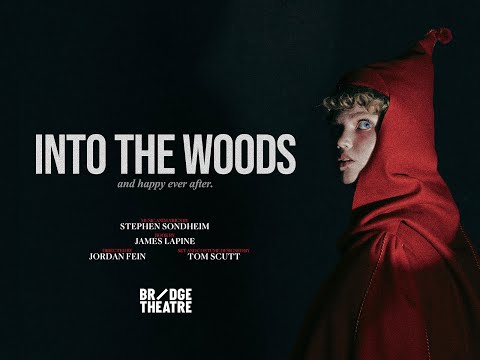
Into the Woods is firmly in active repertory life right now. In London, Jordan Fein’s production is running at the Bridge Theatre from December 2025 through May 30, 2026, and major outlets have treated it as a top-tier revival with a clear focus on making Sondheim’s writing land cleanly for a contemporary audience.
In the United States, the title continues to thrive as a major regional and nonprofit staple. A prominent example in the current season is San Francisco Playhouse’s production running November 20, 2025 to January 17, 2026, which local coverage explicitly highlighted for how the final songs frame community as both comfort and obligation.
Broadway status myth-check: the most recent Broadway revival (the Encores! transfer) opened in July 2022 and played through January 8, 2023. As of today’s date, there is no verified announcement in the sources cited below of a new Broadway engagement opening in 2026.
Notes & trivia
- The original Broadway production opened November 5, 1987 at the Martin Beck Theatre and ran 765 performances, per IBDB.
- MTI’s official synopsis begins with three dwellings revealed in a forest, a staging clue baked directly into the licensed storytelling.
- Lapine has described initial skepticism about fairy tales because characters can feel morally flat, a concern the final show attacks head-on by complicating everyone.
- The Original Broadway Cast Recording’s first LP release date is documented as January 8, 1988.
- The 2022 Broadway revival generated an official cast recording released digitally September 30, 2022, later winning the Grammy for Best Musical Theater Album.
- The show’s Act II blame-chain is engineered as musical structure: the group argument becomes a piece of rhythm and repetition before it becomes a moral debate.
- The Bridge Theatre revival has been widely reviewed as a meticulous staging that lets the score’s complexity read as clarity rather than clutter.
Reception: praise for the craft, arguments about the moral fog, and why that fog is the point
From the start, critics loved the musical intelligence and sometimes fought with the message. That tension has followed Into the Woods for decades: some reviewers want a clean moral, while the show keeps offering something truer and less comforting. In a 1987 piece discussing the critical split, the question was framed bluntly: is the piece a straightforward fable or a private in-joke, and what do we do with the final turn toward togetherness?
Modern reviews of major revivals have increasingly treated the ambiguity as a feature, not a bug. The Financial Times and The Guardian both praised the Bridge Theatre staging for balancing humor and horror while allowing the second act’s consequences to hit without turning the piece into a lecture.
“Is this a straightforward fable with real import, or an in-joke?”
“A five-star production… allowing Sondheim’s intricate score to shine.”
“Vibrant and emotionally rich.”
Quick facts
- Title: Into the Woods
- Year: 1987 (Broadway opening)
- Type: Original book musical
- Book: James Lapine
- Music & lyrics: Stephen Sondheim
- Based on: Brothers Grimm fairy tales (interwoven)
- Original Broadway venue: Martin Beck Theatre (now Al Hirschfeld Theatre)
- Original Broadway run: November 5, 1987 to September 3, 1989 (765 performances)
- Selected notable placements: “Prologue” (set-up of wishes); “Agony” (romance satire); “Last Midnight” (accountability break); “No One Is Alone” and “Children Will Listen” (late-act ethical landing)
- Cast album status: Original Broadway Cast Recording (RCA Victor; first LP release documented January 8, 1988)
- Recent album note: 2022 Broadway cast recording released September 30, 2022; Grammy winner for Best Musical Theater Album
- Licensing: Available via Music Theatre International (MTI)
- Film adaptation: Feature film released in 2014
Frequently asked questions
- Who wrote the lyrics for Into the Woods?
- Stephen Sondheim wrote the music and lyrics. James Lapine wrote the book.
- Why are there two acts with such different moods?
- Act I follows the wish-quest logic of fairy tales. Act II examines the fallout, asking what happens after the “happy ending” stops functioning.
- Is there an official song list that matches the story order?
- Yes. MTI publishes the full song list and a full synopsis that tracks scenes through both acts.
- What is the best cast recording to start with?
- For the classic architecture, start with the Original Broadway Cast Recording. If you want a modern studio capture of a major revival, the 2022 Broadway cast recording is a strong alternative.
- Is Into the Woods on Broadway in 2026?
- No verified Broadway engagement is open as of January 27, 2026. The most recent Broadway revival closed January 8, 2023.
- Is Into the Woods appropriate for kids?
- It contains fairy tale violence and, in Act II, heavier themes about death and responsibility. Many families enjoy it, but it plays best when adults are ready to talk about the consequences the show raises.
Key contributors
| Name | Role | Contribution |
|---|---|---|
| Stephen Sondheim | Composer, lyricist | Wrote the score and lyrics that turn fairy-tale desire into a moral logic puzzle. |
| James Lapine | Book writer, original director | Structured the intertwined tales and shaped the production language that makes Act II consequence-driven. |
| Music Theatre International (MTI) | Licensing | Publishes the official synopsis and full musical-number list used by producers and educators. |
| IBDB | Production record | Maintains authoritative Broadway run data for the original production. |
| Jordan Fein | Director (Bridge Theatre revival) | Led a major 2025-2026 London revival widely praised for precision and emotional clarity. |
| San Francisco Playhouse | Producing theatre | Mounted a notable 2025-2026 U.S. regional production highlighted for its community-focused landing. |
Sources: Music Theatre International (MTI), IBDB, LondonTheatre.co.uk, Financial Times, The Guardian, Los Angeles Times, San Francisco Playhouse, San Francisco Chronicle, Masterworks Broadway, Broadway Direct, Playbill, Wikipedia (for consolidated development notes, cross-checked).