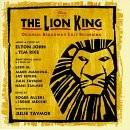
Lion King Lyrics: Song List
- Circle of Life
- Grasslands Chant
- Morning Report
- Lioness Hunt
- I Just Can't Wait to Be King
- Chow Down
- They Live in You
- Be Prepared
- Stampede
- Rafiki Mourns
- Hakuna Matata
- One by One
- Madness of King Scar
- Shadowland
- Lion Sleeps Tonight
- Endless Night
- Can You Feel the Love Tonight?
- He Lives in You (Reprise)
- Simba Confronts Scar
- King of Pride Rock/Circle of Life (Reprise)
About the "Lion King" Stage Show
"The Lion King" is a musical based on the original and rather popular eponymous animated cartoon by the Walt Disney Company (at that time it was called a little differently).
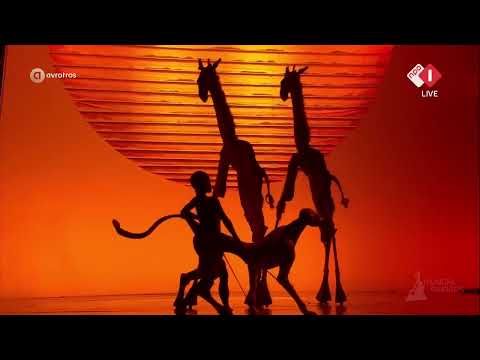
Being launched for the first time on Broadway in 1997, the production has experienced one move (to the Minskoff Theatre) and has toured across various countries such as the USA, Canada, Mexico, South America, the UK, and others. It has been performed on all continents and has collected over USD 7 billion in box office revenue globally (till 2025).
Elton John, a fantastical person, originally wrote and performed all the instrumental and vocal music, while Tim Rice co-wrote many of the lyrics.
Participants of the West End’s cast performed this musical for notable representatives of the Royal Family in London.
Some of the songs underwent musical adaptation (e.g., "Lea Halalela" received English lyrics instead of the original ones, and along with almost all other ethnic melodies, was written using six of the most popular African dialects).
The Lion King musical has grown to be one of the most popular and well-received shows in theater history since its premiere. Six Tony Awards have been given to it, including Best Musical, and its inventive use of puppetry, colorful costumes, and potent storyline have never failed to enthrall audiences.
Milestones and Evolution of Musical on Broadway.
20th Anniversary Celebration in 2019.
In 2019, The Lion King marked two dazzling decades on Broadway. A special anniversary performance ignited the Minskoff Theatre with emotion and nostalgia. Audiences were treated to rare behind-the-scenes panels and immersive exhibits. These events honored the show's enduring legacy and unmatched cultural resonance.Technological Enhancements and Sustainability.
By 2020, fresh innovations amplified the touring experience. New soundscapes and immersive lighting reshaped familiar scenes without betraying their origins. The Broadway musical leaned into sustainability, introducing eco-friendly initiatives. Costume recycling and reduced energy usage became part of backstage life. These green actions aligned the magic of Pride Rock with the needs of the planet.Hall of Fame Recognition and Global Expansion.
In 2021, the Theatre Hall of Fame honored The Lion King for its global impact. This recognition affirmed its status as a generational masterpiece. New stagings launched in South Korea and Brazil, each embracing local artistry. Pride Rock’s power now transcends language, connecting hearts in every hemisphere.- Over 100 million worldwide viewers since its debut.
- Translated into nine languages, including Korean and Portuguese.
- Named the highest-grossing Broadway production of all time.
Release date of the musical: 1997
"The Lion King" – The Musical Guide & Song Meanings
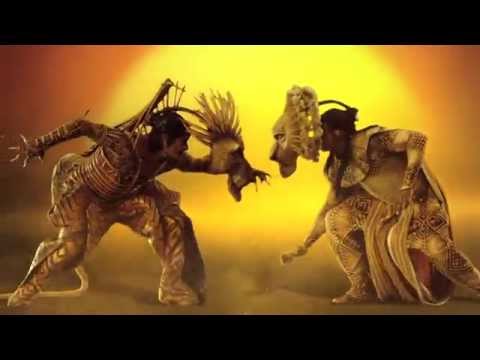
Review
Why does The Lion King still sell tickets to people who already know every plot turn? Because the show’s lyrics are not primarily “about” lions. They are about inheritance: the stories adults give children, the stories children repeat, and the moment a grown child has to revise the family myth to survive it.
Tim Rice’s film songs carry the commercial load, but the stage musical’s lyrical identity is shaped by its added African choral writing and Taymor’s dramaturgical choices. The words are often ceremonial rather than conversational. That decision turns plot into ritual. “Circle of Life” is not a catchy opener. It is a community announcing its values before we meet the kid who will break them. Then the show gets sly: the biggest laughs (“Hakuna Matata”) are also the most dangerous philosophy, because the lyric literally teaches Simba how to avoid grief.
Musically, the score is a collage with discipline. Elton John and Rice deliver pop architecture. Lebo M’s choral material supplies spiritual weight and linguistic texture. Zimmer and collaborators give the show its pulse and dread. The motifs keep returning in different costumes: a melody becomes a chant, a joke becomes a warning, a lullaby becomes a command. That is why the album still plays well at home. It is designed to loop.
How it was made
The stage musical premiered in Minneapolis in July 1997, then moved to Broadway previews in October and opened in November 1997. It later transferred theatres on Broadway in 2006 and has kept going, which is the polite way to say it became an industry. The creative gamble was Julie Taymor: an artist of masks, puppets, and world theatre forms, asked to translate a beloved animated film into a live event without turning actors into theme-park mascots.
Taymor has been explicit about what unlocked it. In a long American Masters interview, she points to Lebo M’s music as a key inspiration, and she names “Shadowland” and “He Lives in You” as favorites. She also notes that she wrote lyrics for “Endless Night,” which helps explain why that number feels like it is arguing with the rest of the score. Simba is not singing a pop confession. He is singing a private legal brief against the universe.
The most famous piece of “how we did it” lore is the opening. Reported accounts describe Taymor building a theatrical sunrise from simple materials and trusting lighting to do the alchemy. That choice tells you the show’s aesthetic politics: it wants you to see the mechanism and still surrender to the image.
Key tracks & scenes
"Circle of Life" (Rafiki, Company)
- The Scene:
- Dawn. A slow brightening across the stage, then a procession of animals moving through the aisles and onto the playing space. The air feels ceremonial. The choreography reads like a gathering, not a “number.”
- Lyrical Meaning:
- The lyric announces the show’s central contract: life is cyclical, power is temporary, and the community is watching. It also sets up the show’s recurring tension: ritual can be comforting, but it can also pressure people into silence.
"Grasslands Chant" (Company)
- The Scene:
- A kinetic transition into the Pride Lands, driven by choral rhythm. Lighting shifts to open the space wider, as if the landscape is unfolding in real time.
- Lyrical Meaning:
- This is world-building through sound. The words work like percussion, and the chorus becomes the savanna itself. It makes the “place” feel older than the plot.
"They Live in You" (Mufasa, Company)
- The Scene:
- Mufasa instructs young Simba under starlight. The tone is intimate, with a hush that contrasts the opener’s pageantry. The lesson is both comfort and command.
- Lyrical Meaning:
- A key lyrical pivot: legacy becomes literal. The song frames ancestry as surveillance and support at once. Simba learns that he is never alone, which later becomes the reason guilt can’t be outrun.
"I Just Can’t Wait to Be King" (Young Simba, Young Nala, Zazu, Ensemble)
- The Scene:
- Full-color playground politics. Bright lighting, busy stage pictures, and a cascade of costumes that exaggerate childish confidence into carnival.
- Lyrical Meaning:
- The lyric is pure appetite. It reduces leadership to perks and volume. The number is funny because it is true, and it matters because it shows how little Simba understands what “king” will cost him.
"Be Prepared" (Scar, Hyenas, Company)
- The Scene:
- A political rally staged as a nightmare. The light cools, angles sharpen, and the choreography snaps into militarized patterns. Scar’s charisma becomes choreography.
- Lyrical Meaning:
- Rice writes Scar as a salesman for grievance. The lyric flatters the hyenas, then drafts them. It is a coup disguised as a chorus line.
"Hakuna Matata" (Timon, Pumbaa, Simba, Company)
- The Scene:
- Sunlit reset. The staging turns into a fast montage of Simba growing up, with comic bits that feel like a relief valve after trauma.
- Lyrical Meaning:
- The lyric sells avoidance as wisdom. It is the show’s most seductive lie. Every time it lands, it pushes Simba further from the grief he has not processed.
"Shadowland" (Nala, Company)
- The Scene:
- Nala runs from a dying Pride Lands. The stage can feel stripped, the colors drained. Movement carries urgency, like flight.
- Lyrical Meaning:
- This is the musical’s corrective to Simba’s exile. The lyric refuses nostalgia. It gives Nala agency and turns “home” into an ethical demand rather than a sentimental memory.
"Endless Night" (Simba, Company)
- The Scene:
- Simba alone, finally. The crowd energy disappears. A tight pool of light isolates him while the music expands, as if the night has no walls.
- Lyrical Meaning:
- The lyric is grief without jokes. It argues with fate and admits fear. It is also the first time adult Simba sounds like a person making a choice, not a boy being moved by other people’s philosophies.
"He Lives in You" (Rafiki, Simba, Company)
- The Scene:
- A communal summoning. Rafiki leads, the ensemble answers, and Simba is pulled back into the story he has tried to quit. The staging often feels like ceremony turning into confrontation.
- Lyrical Meaning:
- The lyric completes the legacy argument: memory becomes responsibility. It reframes Mufasa not as a ghost who comforts, but as a principle Simba must embody.
Live updates
Current as of January 28, 2026. On Broadway, The Lion King continues at the Minskoff Theatre. Recent Playbill reporting (August 2025) listed Gavin Lee (Scar), Tshidi Manye (Rafiki), L. Steven Taylor (Mufasa), Vincent Jamal Hooper (Simba), and Pearl Khwezi (Nala) among the principal company, with youth casting continuing to rotate.
The North American tour remains active, with Disney’s official tour cast page listing Peter Hargrave (Scar), David D’Lancy Wilson (Mufasa), Zama Magudulela (Rafiki), Nick Cordileone (Timon), and Nick LaMedica (Zazu) among its featured players. Tour casting is a moving target, so the official page is the most reliable snapshot.
In London, the show remains at the Lyceum Theatre, and West End casting news dated January 27, 2026 announced Stephenson Ardern-Sodje returning as Simba for a limited run through May 3, 2026. Reuters also marked the production’s West End longevity at the Lyceum and framed the show as a continuing global phenomenon, which is a diplomatic way of saying it prints money and memories at the same time.
Notes & trivia
- The musical debuted July 8, 1997 in Minneapolis, began Broadway previews October 15, 1997, and officially opened November 13, 1997.
- The Broadway production moved from the New Amsterdam Theatre to the Minskoff Theatre on June 13, 2006 and continues there.
- The Original Broadway Cast Recording includes “The Morning Report,” but the song was cut from the Broadway production in June 2010 as part of show trims reported by Variety.
- “He Lives in You” originated on the 1995 album Rhythm of the Pride Lands and appears in the stage musical in multiple forms across the evening.
- Julie Taymor has stated she wrote lyrics for “Endless Night,” a rare case of the director also functioning as a lyric contributor on a mega-musical.
- Major stage additions beyond the film’s core include “Shadowland,” “Endless Night,” and expanded choral sequences that foreground African languages and textures.
- Playbill has listed the cast album among top-selling cast recordings, noting its RIAA platinum certification date.
Reception
In 1997, the immediate critical story was visual invention meeting musical familiarity. The lyrics were rarely singled out alone because Taymor’s imagery was the headline, but the best notices clocked how the reworked score and added material re-aimed the story toward Africa rather than Broadway’s usual “generic elsewhere.”
In the 2020s, the conversation has shifted. Longevity itself is part of the review. The show is now judged on precision and maintenance: does the stage picture still land, does the chorus still read as communal rather than decorative, and do the jokes still hide the darker philosophy underneath.
“A marvel, a theatrical achievement unrivaled in its beauty, brains and ingenuity.”
“Circle of Life” is “enchantment,” and the animals embody “the interconnectedness of all living things.”
Praised for “intricate puppetry” and “diverse artistic influences,” including multiple African languages.
Quick facts
- Title: The Lion King
- Year (Broadway opening): 1997
- Type: Book musical
- Director: Julie Taymor
- Primary songwriters: Elton John (music) and Tim Rice (lyrics), with additional music/lyrics contributions credited to Lebo M, Hans Zimmer, Mark Mancina, Jay Rifkin, Tsidii Le Loka, and Julie Taymor (by song)
- Broadway theatres: New Amsterdam (1997-2006), Minskoff (2006-present)
- Selected notable placements: “Circle of Life” as the sunrise/prologue; “They Live in You” as Mufasa’s starlight lesson; “Hakuna Matata” as a growth montage; “Shadowland” as Nala’s escape; “He Lives in You” as Rafiki’s communal call to return.
- Original Broadway Cast Recording: Released 1997 (Walt Disney Records)
- Album quirks: Includes “The Morning Report” (later cut from Broadway in 2010); includes “The Lion Sleeps Tonight.”
- Availability: Widely streaming; multiple international cast albums also exist.
- 2025-2026 status: Broadway ongoing; North American tour ongoing; West End ongoing with announced 2026 casting updates.
Frequently asked questions
- Who wrote the lyrics for The Lion King musical?
- Tim Rice wrote the lyrics for the core film songs used in the stage show, and additional lyrical contributions are credited across the stage score (including Julie Taymor on “Endless Night”), depending on the song.
- Is “The Morning Report” in the Broadway show right now?
- No. It appears on the Original Broadway Cast Recording, but it was cut from the Broadway production in June 2010 as part of trims.
- Where does “He Lives in You” come from?
- It originated on the 1995 album Rhythm of the Pride Lands and was adapted into the stage musical, where it appears in multiple forms.
- Why do the lyrics include African languages?
- Because the stage score leans into African choral writing and language textures to root the story’s world and ritual life, especially in opening and communal sequences.
- What is the show’s main lyrical idea?
- That legacy is not a warm memory. It is a duty you either accept or dodge, and the dodging has consequences.
- Is the show still running in 2026?
- Yes. It continues on Broadway, continues in London’s West End, and continues on a North American tour, with casting updates reported across late 2025 and early 2026.
Key contributors
| Name | Role | Contribution |
|---|---|---|
| Julie Taymor | Director, Designer, Lyric contributor | Defined the show’s mask/puppet language and contributed lyrics (notably credited on “Endless Night”). |
| Tim Rice | Lyricist | Wrote lyrics for the film’s core songs carried into the stage score. |
| Elton John | Composer | Composed the film’s pop songs adapted for the stage. |
| Lebo M | Composer, arranger | Anchored choral writing and additional material that deepens the show’s African musical identity. |
| Hans Zimmer | Composer | Provided foundational score material adapted for stage, including dramatic sequences. |
| Mark Mancina | Composer | Co-wrote and shaped stage cues and songs including versions of “He Lives in You.” |
| Jay Rifkin | Composer | Co-writing credits across stage material, including “He Lives in You” variants. |
| Tsidii Le Loka | Composer, performer (original cast) | Credited on stage material and originated Rafiki on Broadway, imprinting the show’s vocal identity. |
| Disney Theatrical Productions | Producer | Produces the Broadway, touring, and international productions. |
Sources: IBDB; Playbill; Disney The Lion King (official site); The Lion King London (official site); Variety; Los Angeles Times; Reuters; PBS American Masters; The Guardian; Vanity Fair; Ticketmaster Discover; New York Theatre Guide.