
My Fair Lady Lyrics: Song List
- Act 1
- Why Can't the English?
- Wouldn't It Be Loverly?
- With a Little Bit of Luck
- I'm an Ordinary Man
- Just You Wait
- Rain in Spain
- I Could Have Danced All Night
- Ascot Gavotte
- On the Street Where You Live
- Eliza's Entrance/Embassy Waltz
- Act 2
- You Did It
- Show Me
- Get Me to the Church on Time
- Hymn to Him
- Without You
- I've Grown Accustomed to Her Face
About the "My Fair Lady" Stage Show
At the heart of the musical is a G. B. Shaw’s play ‘Pygmalion’. Screenwriter is A. J. Lerner. Composer – F. Loewe. Lyrics by A. J. Lerner. Off-Broadway premiere took place in February 1956 at the Shubert Theatre’s stage. In February musical moved to Erlanger Theatre. In the Broadway, show was exhibited in the Mark Hellinger Theatre. Then it shifted to the stage of Broadhurst Theatre, and after – at The Broadway Theatre. The spectacular was staging from March 1956 to September 1962, endured through 2717 performances. Director – M. Hart, choreographer – H. Holm. In the play starred: J. Andrews, R. Harrison, R. Coote, C. Nesbitt, S. Holloway, P. Bevans among others.
The London premiere took place in the Theatre Royal on Drury Lane. Musical was shown from April 1958 to January 1970 with 2281 exhibitions. Stars were: J. Andrews, R. Coote, R. Harrison, S. Holloway, Z. Dare, L. Weir. Updated musical went on stage of St. James Theatre from March to December 1976. Then it again moved, this time – to the Lunt-Fontanne Theatre, where has been staged from December 1976 to February 1977 with 377 appearances. Director was J. Adler. Choreographer – C. Diehl. In the play starred: I. Richardson, G. Rose, C. Andreas, R. Coote, B. Forbes, J. Lanning and others.
In 1979, this piece was at London's Adelphi Theatre and Uris Theatre from August to November 1981. In Virginia Theatre, it was from December 1993 to May 1994. Show was from March to July of the same year at the Royal National Theatre & Theatre Royal. Overall, this production took place in 17 countries around the world. The musical has received a number of awards: Theatre World, Outer Critics Circle, Tony, Drama Desk, Laurence Olivier.
Release date of the musical: 1956
"My Fair Lady" – The Musical Guide & Song Meanings
Review: what the lyrics are really doing
How do you write songs for a story where the central relationship is, at best, a prolonged argument? “My Fair Lady” answers with language itself: the score treats diction as both romance and weapon. Alan Jay Lerner’s lyric work is less about pretty declarations than about social calibration, with every rhyme quietly measuring who gets to be heard, who gets corrected, and who gets laughed at. The clever trick is that the show sells you charm while it is also documenting control.
The lyrical themes are class and performance, but the engine is identity. Eliza’s journey is not “learn to speak well”; it is “learn what people assume you are worth the moment you open your mouth.” Higgins’s songs tilt toward systems: rules, categories, habits. Eliza’s songs tilt toward sensation: hunger, weather, exhaustion, sudden joy, the shock of being treated differently. When the lyric point of view flips from “the world is badly spoken” to “I will decide what my words mean,” the plot turns with it.
Musically, Loewe’s writing is intentionally legible. It is not trying to sound dangerous; it is trying to sound inevitable. That choice matters. The score’s apparent politeness makes the harsher moments land harder, because the music refuses to announce them as “big drama.” Instead, the text does the dirty work: a tossed-off line can sting more than a sustained note. Listener tip: if you want to follow the story through the album, pay attention to how often characters sing about speech, not feelings. In this show, speech is the feeling.
How it was made: Lerner, Loewe, and the hard problem of Shaw
“Pygmalion” was considered a headache to musicalize for a reason: it is allergic to conventional romance. Yet Lerner and Loewe kept returning to it, partly because Shaw’s world already runs on verbal status games. When it finally clicked, the show’s breakthrough was not “add a love story,” but “treat transformation as the seduction.” The wager gives the plot propulsion; the lyric writing supplies the moral hangover.
One of the most practical, under-discussed reasons the “My Fair Lady” album became a legend is that it was built like a listening object, not a souvenir. Masterworks Broadway notes Columbia’s Goddard Lieberson backed the production financially in exchange for cast-album rights, then rushed the recording to market almost immediately after the Broadway opening. That decision turned the score into a mass-market narrative before many people could ever buy a ticket.
And yes, there is real “how the sausage got made” texture in the lore. Vanity Fair’s account (drawing on Nancy Olson Livingston’s memoir) describes the creative push and pull around shaping key numbers and the general strain of getting this particular story to sing. The irony: a show about training someone to speak “properly” became a proving ground for how messy collaboration sounds before it resolves into craft.
Key tracks & scenes: 8 moments that carry the show
"Why Can't the English?" (Henry Higgins)
- The Scene:
- We meet Higgins in public, doing what he does best: diagnosing strangers. A bright social exterior, a cold interior. He is essentially conducting a one-man lecture while the street carries on around him.
- Lyrical Meaning:
- The show’s thesis in miniature: accent is treated as destiny. Lerner writes Higgins as a man who confuses observation with authority, and the lyric’s bite is that it is funny until you realize the target is human.
"Wouldn't It Be Loverly?" (Eliza)
- The Scene:
- Covent Garden, nighttime chill, a small knot of people trying to stay warm in whatever light the street gives them. The fantasy is modest: comfort, safety, quiet.
- Lyrical Meaning:
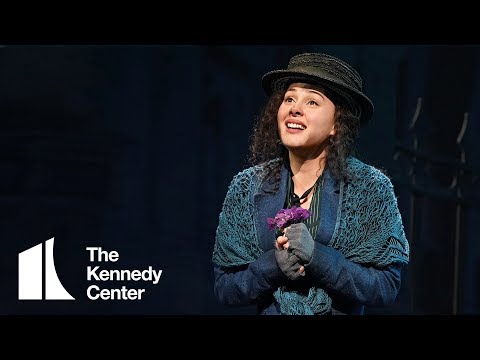
- The lyric is not about luxury; it is about relief. Eliza’s voice is built from sensory detail, which makes her later “polish” feel like a costume layered on top of a very real body.
"Just You Wait" (Eliza)
- The Scene:
- Higgins’s home becomes a pressure cooker. Lessons turn into endurance tests. Eliza’s imagination, in self-defense, stages revenge in her head with theatrical precision.
- Lyrical Meaning:
- This is anger made articulate. The lyric is a release valve, and it also signals intelligence: Eliza is not a blank slate, she is a mind being cornered.
"The Rain in Spain" (Eliza, Higgins, Pickering)
- The Scene:
- Exhaustion, repetition, a house on the verge of mutiny. Then the sudden click: Eliza lands the phrase correctly, and the room detonates into celebration.
- Lyrical Meaning:
- The number is a victory lap, but the lyric subtext is transactional: her success is their triumph. The sweetness is real, and so is the power imbalance that frames it.
"I Could Have Danced All Night" (Eliza)
- The Scene:
- Late night, private space, the world finally quiet. Eliza cannot sleep because her life has just expanded and her body is trying to catch up.
- Lyrical Meaning:
- Lerner writes exhilaration without sophistication. The lyric’s innocence is strategic: it makes the later emotional whiplash feel like a betrayal of something earned.
"Ascot Gavotte" (Ensemble)
- The Scene:
- Daylight and ritual. A crowd performing wealth with upright posture and carefully rationed emotion. Eliza is placed inside the pageant like a test specimen.
- Lyrical Meaning:
- This is satire you can waltz to. The lyric and rhythm work as social choreography: everyone sounds the same because that is the point.
"On the Street Where You Live" (Freddy)
- The Scene:
- Outside Higgins’s house, an upper-class romantic in a very ordinary street, treating pavement like holy ground. The lighting is basically moon and obsession.
- Lyrical Meaning:
- The lyric is rapture with blinders on. Freddy loves an idea, and the show lets him be gorgeous and ridiculous at once, which is harder than it sounds.
"Get Me to the Church on Time" (Alfred P. Doolittle)
- The Scene:
- A pub burst of momentum. Friends, noise, a man insisting on one last spree before respectability closes around his neck.
- Lyrical Meaning:
- Under the swagger is a class joke with teeth: “good fortune” becomes its own trap. Doolittle’s lyric comedy is a mask for how quickly society reclassifies people when money enters the room.
"I've Grown Accustomed to Her Face" (Henry Higgins)
- The Scene:
- After the experiment is declared “done,” the emptiness arrives. Higgins is alone with habits he pretends are principles, trying to label loss as inconvenience.
- Lyrical Meaning:
- The lyric is emotional avoidance with elegance. Higgins cannot say what he feels, so he inventories it. The restraint is the confession.
Live updates (2025-2026): productions, concerts, recordings
Information current as of January 29, 2026. “My Fair Lady” never really goes away; it changes scale. In the UK, the Mill at Sonning staged a revival running from November 20, 2025 through January 17, 2026, led by Simbi Akande (Eliza) and Nadim Naaman (Higgins). That run has just closed, which is exactly how this title behaves: short engagements, steady demand, zero panic.
Looking ahead, Pitlochry Festival Theatre has announced a new chamber staging of “My Fair Lady” for November 21 to December 31, 2026, with Alan Cumming as Higgins and direction by Maria Friedman. That combination hints at a sharper, actor-forward approach where the lyric barbs matter as much as the waltzes.
On the concert side, Pacific Symphony’s 2025-26 Pops season lists “My Fair Lady in Concert” on April 24, 2026, another sign of how the score functions as a standalone hit parade when paired with a big orchestra and minimal scenery.
Recording-wise, the “My Fair Lady” ecosystem keeps expanding beyond the classic cast LP. The Financial Times praised John Wilson and Sinfonia of London’s 2025 release for completeness and attention to original orchestrations, which is catnip for listeners who want to hear the glue between the famous numbers. Translation: the score is still a live technical project, not just a museum piece.
Notes & trivia
- Eliza’s listed vocal range (for licensed productions) is commonly given as A3 to G5, a reminder that the role is not just “ingenue charm” but athletic singing.
- The original Broadway production opened March 15, 1956 at the Mark Hellinger Theatre and ran 2,717 performances, a record at the time.
- MTI’s synopsis ties several songs directly to plot tests: Ascot as a public trial, the Embassy Ball as the final exam, and “You Did It” as the moment the men declare victory while Eliza feels used.
- The 2018 Lincoln Center revival treated “Embassy Waltz” as a true second-act curtain-raiser spectacle; NBC News even built a 360-degree video around the staging.
- Masterworks Broadway notes Columbia’s Goddard Lieberson helped finance the production and secured cast-album rights, then released the original cast recording on April 2, 1956.
- IBDB lists the most recent major North American touring run of “My Fair Lady” as opening December 10, 2019 and closing August 14, 2022.
- Ticketing aggregators sometimes label events “Touring” while listing many regional-theatre engagements; always click through to the specific venue page to confirm which production you are buying.
Reception: then vs now
In 1956, critics framed the show as a rare case of high craft meeting mass pleasure. Over time, the conversation has shifted toward power dynamics: what used to read as “spark” can read as cruelty, and productions increasingly stage that tension rather than smoothing it away. Modern revivals tend to protect Eliza’s agency more explicitly, often by sharpening the staging around the moments where Higgins treats her like an object lesson.
“It’s a wonderful show. To Shaw’s agile intelligence it adds the warmth, loveliness and excitement of a memorable theatre frolic.”
“With the lightest of touches, Brining reveals Shaw’s critique of the British class system to be as neatly embedded in the structure of the musical as in the play.”
“TIME’s reviewer called it ‘a delight’ and noted that ‘Rex Harrison and Julie Andrews play Higgins and Eliza to perfection.’”
Quick facts (album + show)
- Title: My Fair Lady
- Broadway premiere: March 15, 1956 (Mark Hellinger Theatre)
- Type: Musical (book and lyrics by Alan Jay Lerner; music by Frederick Loewe), adapted from George Bernard Shaw’s “Pygmalion”
- Selected notable placements: Ascot racecourse (“Ascot Gavotte”); Embassy Ball (“Embassy Waltz”); Covent Garden flower market (“Wouldn’t It Be Loverly?”)
- Original Broadway cast album: Released April 2, 1956 (Columbia Records; commonly cited as OL 5090)
- Album producer: Goddard Lieberson (commonly credited on major reissues and catalog notes)
- Album availability: Reissues across formats; the score’s profile is sustained by both classic cast recordings and newer orchestral-complete projects
- Touring context: A major U.S. tour ran 2019-2022 (IBDB)
Frequently asked questions
- Who wrote the lyrics to “My Fair Lady”?
- Alan Jay Lerner wrote the book and lyrics; Frederick Loewe wrote the music.
- Where do the biggest songs land in the story?
- “Wouldn’t It Be Loverly?” sits in Covent Garden early on; “The Rain in Spain” marks Eliza’s breakthrough; “Ascot Gavotte” is the public test; “Embassy Waltz” frames the final exam; “I’ve Grown Accustomed to Her Face” is Higgins alone with the consequences.
- Is there a current major revival or tour?
- As of January 29, 2026, a recent UK run at the Mill at Sonning closed on January 17, 2026, and Pitlochry Festival Theatre has announced a chamber revival for November 21 to December 31, 2026.
- Is there a film version?
- Yes. A major 1964 film adaptation helped cement the score’s mass popularity.
- Why does the show feel romantic if the relationship is so prickly?
- Because the romance is partly formal: the music romanticizes the act of change. The lyrics keep reminding you that change has a cost, which is why the ending still provokes debate.
Key contributors
| Name | Role | Contribution |
|---|---|---|
| Alan Jay Lerner | Book & Lyrics | Built the show’s verbal chess match: class, identity, and the comedy of correction. |
| Frederick Loewe | Music | Wrote a score that makes satire sing and makes “polite” sound emotionally loaded. |
| Moss Hart | Original Director | Shaped pacing and tone so the talk-heavy story still moves like a musical. |
| Goddard Lieberson | Cast Album Producer (Columbia) | Helped finance the production and turned the cast recording into a mass-market event. |
| Robert Russell Bennett | Orchestrations (credited on major sources) | Helped define the show’s orchestral identity, the sonic “Englishness” with bite. |
| Philip J. Lang | Musical arrangements (credited on major sources) | Supported the score’s dance and scene mechanics with crisp, playable architecture. |
Sources: MTI (Music Theatre International), Playbill, TIME, The Guardian, TheaterMania, IBDB, Pitlochry Festival Theatre, Pacific Symphony, Masterworks Broadway, Vanity Fair, Financial Times, Discogs.