
West Side Story Lyrics: Song List
About the "West Side Story" Stage Show
Release date of the musical: 1957
"West Side Story" – The Musical Guide & Song Meanings
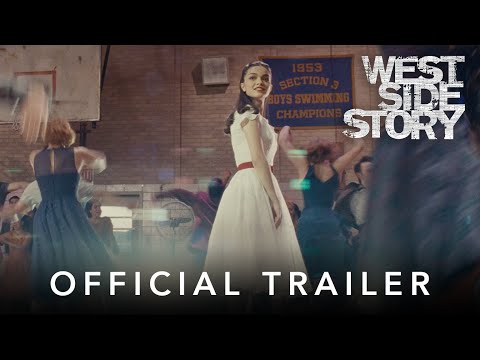
Review
“West Side Story” is what happens when a love story tries to whisper inside a street fight and gets drowned out, on purpose. The show’s central argument is brutal and practical: young love is real, and it still cannot outmuscle a neighborhood built on grievance, fear, and pride. If you came for a Romeo and Juliet update, you get it. If you came for a score that moves like a city, you get that too.
Stephen Sondheim’s lyrics (early-career, already sharp) live on two speeds. In the romantic numbers, the language reaches for poetry fast, sometimes too fast for the characters’ education level, which Sondheim later criticized himself. In the group numbers, the lyric voice turns into social x-ray: class anxiety, immigrant debate, masculine posturing, and the nervous comedy of kids who can only say “I’m scared” through a joke. The writing does not politely separate politics from romance. The romance is political, because it crosses a border the gangs treat as law.
Leonard Bernstein’s music does the heavy lifting that most musical theatre scores only imply. The rhythms snap and sting. The harmonies can turn sweet, then sour, in the same breath. The motifs keep returning like familiar street corners, which matters because the story is about people who cannot escape their corner. It is also a dance musical in the strictest sense: the choreography is not decoration. It is character behavior with consequences.
How It Was Made
The project began as a contemporary “Romeo and Juliet” idea in 1949. Early drafts placed the conflict between Catholics and Jews on the Lower East Side, timed around Easter and Passover, under the working title “East Side Story.” The team eventually shifted to the Jets and Sharks, reflecting Puerto Rican immigration patterns in mid-century New York and the creators’ sense that the city had changed faster than the original concept could keep up.
The collaboration is the point. Jerome Robbins pushed for dance as narrative engine. Arthur Laurents built a book that refuses to romanticize gang life. Bernstein wanted a “lyric theater” ambition, closer to opera than to light entertainment, and the finished piece keeps that muscle. Sondheim, recruited while still young, took the lyric assignment after Oscar Hammerstein urged him to treat it as a masterclass with a deadline. The show opened on Broadway on September 26, 1957, and the original cast recording was made days later, capturing performances that still sound like the paint is wet.
One useful modern lens: “West Side Story” has become a show of versions. The 1961 film moves and reshapes numbers. The 2021 film revisits language and cultural framing. Stage revivals re-balance tone, sometimes cutting or relocating songs. If you want to understand the lyrics, you have to track not only what is said, but when and by whom it is allowed to be said.
Key Tracks & Scenes
"Prologue" (Company)
- The Scene:
- Late-summer streets under hard, angled light. The Jets and Sharks mark territory with movement first, as if words would be too honest.
- Lyrical Meaning:
- No lyrics, which is the point. The show introduces violence as choreography before it becomes dialogue. The silence is a warning: this world communicates through threat.
"Something's Coming" (Tony)
- The Scene:
- Doc’s drugstore energy, the hum of ordinary life. Tony is restless, half-smiling, trying to talk himself into a future that is not the gang.
- Lyrical Meaning:
- The lyric is optimism with a blind spot. Tony can feel change approaching, but he cannot imagine the cost. The song plants the tragedy early: hope is not protection.
"Balcony Scene / Tonight" (Tony, Maria)
- The Scene:
- A fire escape, a window, and a neighborhood that never fully goes quiet. They speak softly because the world around them has sharp ears.
- Lyrical Meaning:
- “Tonight” works because it turns time into a hiding place. The lyric insists that the present can be perfect if you refuse to look past it. It is romantic, and it is denial.
"America" (Anita, Rosalia, Shark girls and in many versions the Sharks)
- The Scene:
- An after-hours debate that dances. Laughter, sarcasm, and the occasional flash of homesickness. The rhythm makes the argument feel fun until you hear what they are admitting.
- Lyrical Meaning:
- The lyric is a split-screen: aspiration versus insult, opportunity versus exploitation. Its brilliance is that both sides have evidence. Nobody wins the debate, which is the honest ending.
"Cool" (Riff and the Jets)
- The Scene:
- Pre-rumble pressure cooker. The boys try to rehearse self-control like it is a dance step they might forget under stress.
- Lyrical Meaning:
- The lyric is anger management as street ritual. “Play it cool” becomes a survival instruction, not a vibe. In film versions, the placement changes, which changes the meaning: pep talk becomes aftermath.
"Tonight (Quintet)" (Company)
- The Scene:
- Parallel action, fast cross-cutting on stage. Tony and Maria in private hope, the Jets and Sharks in public preparation, Anita and others pushing events forward.
- Lyrical Meaning:
- The lyric is dramatic irony with a metronome. Everybody sings “tonight” as if it means the same thing. It does not. That mismatch is the fuse.
"Somewhere" (Ballet sequence; sung by Consuelo in the original Broadway production)
- The Scene:
- A dream-space after the rumble. Softer light, slowed bodies, the fantasy of peace staged as a community dance that real life will not permit.
- Lyrical Meaning:
- The lyric is a plea without specifics, because specifics would be impossible. “Somewhere” is not a place on a map. It is the idea of safety.
"A Boy Like That / I Have a Love" (Anita, Maria)
- The Scene:
- A cramped interior, grief with no room to breathe. Anita enters as a protector and exits as a messenger the world refuses to hear.
- Lyrical Meaning:
- The lyric is the show’s moral argument in real time. Anita sings tribal loyalty and rage. Maria answers with love that sounds irrational because the world is irrational. The duet does not resolve the conflict; it exposes it.
Live Updates
Information current as of 2 February 2026. “West Side Story” is not sitting still. Official calendars list major European and North American engagements running across 2025 and 2026, including a long run at Volksoper Wien from September 2025 through June 2026, plus a Netherlands touring version presenting dates in February 2026 at Amsterdam’s Koninklijk Theater Carré and additional Dutch cities through spring.
If you are choosing what version to see, it helps to decide what you value: the classic stage structure (with the Act II ballet for “Somewhere”), or the modern film arrangements that re-place numbers like “Cool” and “Gee, Officer Krupke” for different dramatic impact. For first-timers, a traditional stage version clarifies the story’s architecture. For repeat visitors, the newer versions are useful precisely because they reveal what the lyrics change when you move them.
Listening tip before you buy a ticket: play “Tonight (Quintet),” then “Somewhere.” If those two tracks work for you back-to-back, you will be ready for the show’s emotional logic: collective momentum, then collective mourning.
Notes & Trivia
- The original Broadway production opened September 26, 1957 and ran 732 performances.
- Early development began as “East Side Story,” centered on Catholic-Jewish conflict, before shifting to Jets and Sharks.
- The original Broadway song list places “Somewhere” in Act II as a ballet sequence, sung by Consuelo, with the company dancing.
- Sondheim later said some of his “West Side Story” lyrics embarrassed him, citing a specific line in “Tonight” as too literary for Tony’s voice.
- In the 2021 film adaptation process, Tony Kushner described a Sondheim-approved lyric tweak to “America,” changing a line for historical accuracy while preserving the rhyme’s political bite.
- The official “West Side Story” site publishes 1957 Broadway and 1961 film lyric variants for several songs, including “America.”
- IBDB credits Bernstein, Sid Ramin, and Irwin Kostal with orchestration work for the original production, underscoring how carefully the score was engineered for the theatre pit.
Reception
The initial critical response in 1957 did not treat the show as safe entertainment. It was praised for craft while being recognized as harsh material, and that tension is still the right way to watch it. Over time, the score and lyric writing became the show’s strongest defense: even people who argue with the depiction of ethnicity and gender often admit the musical architecture is formidable.
Later conversation has gotten more specific. Critics and artists have debated representation, language, and what “authenticity” means in revival and film casting. That debate has also sharpened attention on the lyrics: when a line feels too polished for a character, it can sound like the author’s hand on the scale. When a line lands, it lands because it is sung by someone who has no other safe way to speak.
“There are moments in it that embarrass me.”
“When I hear it, I just look away and then I look back up at the stage.”
“How about, ‘And the people trying?’”
Quick Facts
- Title: West Side Story
- Year: 1957
- Type: Musical drama
- Book: Arthur Laurents
- Music: Leonard Bernstein
- Lyrics: Stephen Sondheim
- Conceived by: Jerome Robbins
- Original Broadway opening: September 26, 1957 (Winter Garden Theatre)
- Original Broadway run: 732 performances
- Selected notable placements (original Broadway): “Cool” before the rumble; “Somewhere” as Act II ballet sequence sung by Consuelo; “A Boy Like That / I Have a Love” as the Act II emotional crossroads
- Cast recording: West Side Story (Original Broadway Cast Recording), recorded September 29, 1957; widely available via Masterworks Broadway listings
- 2025 to 2026 status: Active international scheduling listed on the official calendar, including Volksoper Wien and touring engagements in the Netherlands
Frequently Asked Questions
- Who wrote the lyrics for West Side Story?
- Stephen Sondheim wrote the lyrics, with music by Leonard Bernstein and a book by Arthur Laurents.
- Where does “Somewhere” sit in the original stage version?
- In the original Broadway production, it appears in Act II as a ballet sequence, sung by Consuelo with the company dancing.
- Why do some versions move songs like “Cool” and “Gee, Officer Krupke”?
- Because placement changes meaning. A pre-rumble “Cool” is a warning. A post-violence “Cool” becomes coping. Film adaptations and some revivals rearrange to match their dramatic emphasis.
- Was it always about Puerto Ricans and white New Yorkers?
- No. Early development began as “East Side Story,” focusing on Catholic-Jewish conflict, before being reimagined with Jets and Sharks.
- Is there an essential recording to start with?
- The 1957 Original Broadway Cast Recording is still the cleanest listening map of the stage architecture, including the scene-to-song structure.
- Is West Side Story still being staged in 2025 and 2026?
- Yes. Official calendars list ongoing productions and engagements across multiple countries during that period.
Key Contributors
| Name | Role | Contribution |
|---|---|---|
| Leonard Bernstein | Composer; orchestrator (credited) | Built a rhythm-driven score that treats harmony and percussion as dramatic action. |
| Stephen Sondheim | Lyricist | Wrote lyrics that toggle between romantic elevation and streetwise social critique. |
| Arthur Laurents | Book writer | Shaped the narrative into a tragic, unsentimental street drama with adult stakes. |
| Jerome Robbins | Conceived by; director; choreographer | Made dance a narrative language, not an intermission from the plot. |
| Sid Ramin | Orchestrator (credited) | Helped translate the score into a theatre pit sound with precision and bite. |
| Irwin Kostal | Orchestrator (credited) | Supported the show’s instrumental color and pacing across scenes and transitions. |
| Harold S. Prince | Producer (credited) | Produced the original Broadway run that set the work’s public identity. |
Sources: IBDB, WestSideStory.com (official), Ovrtur, History.com, CBS News (60 Minutes Overtime), TIME, Masterworks Broadway, Volksoper Wien.