
Wonderful Town Lyrics: Song List
- Act 1
- Overture
- Christopher Street
- Ohio
-
Conquering New York

- One Hundred Easy Ways
- What A Waste
- Little Bit Of Love, A
- Pass The Football
-
Conversation Piece
- Quiet Girl, A
- Conga!
- Act 2
- My Darlin' Eileen
- Swing!
-
Ohio (Reprise)
- Ballet at the Village Vortex
- Wrong Note Rag
-
It's Love (Reprise)
About the "Wonderful Town" Stage Show
The histrionics ‘Wonderful Town’ was featured on Broadway in Winter Garden Theatre from February 1953 to July of the next year. 559 performances were released. The producer of the show became R. Fryer, director – G. Abbott. The lyrics were written by B. Comden & A. Green, composer was L. Bernstein, choreography staged by D. Saddler. The following actors were involved: R. Russell, E. Adams, G. Gaynes & C. Channing.
The show premiered in London’s West End in February 1955. 207 stagings were shown in total. From August 1986 to March 1987, musical was hosted by Queen's Theatre with M. Lipman in the title role. In late 1958, it was broadcast live by CBS Television.
In 2003, there was a revival of the show. Directed by K. Marshall, with such actors: D. Murphy, J. Westfeldt & G. Edelman. The spectacular went from November 2003 to January 2005. Almost 500 performances were exhibited. During this period, Brooke Shields played the role of Ruth.
During the period 2006-2007, company Music Theatre Associates organized the national tour. The German version of the performance is to be shown in December 2016 in Dresden’s Staatsoperette.
Release date of the musical: 1953
"Wonderful Town" – The Musical Guide & Song Meanings
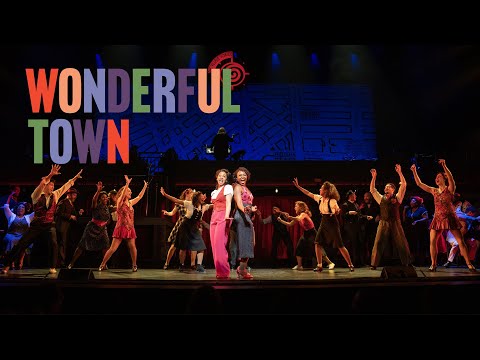
Review
Why does "Wonderful Town" still work when so many mid-century “New York, baby!” musicals now read like museum tours? Because the lyrics are not selling the city. They are bargaining with it. Betty Comden and Adolph Green write ambition as a daily transaction: you trade comfort for possibility, privacy for a story, dignity for a chance. Leonard Bernstein meets them with music that smiles, then suddenly tightens the harmony like the subway doors just shut on your heel.
Listen to the way the show treats Ruth and Eileen as two writing styles. Ruth’s songs are bullet-point confessions, engineered around an actress who was not hired for vocal purity. Eileen’s songs float, flirt, and pivot faster, like a girl practicing her “public face” in the mirror. The lyric trick is that both sisters narrate the same city with different verbs. Ruth tries to control it. Eileen tries to be chosen by it.
The musical style sits in the swing-and-brass neighborhood, but Bernstein keeps flashing forward to himself: athletic rhythms, sharp ensemble writing, and comedy that depends on precision, not volume. That matters for meaning. These characters are funny because they are overwhelmed, not because they are shallow.
Listener tip: play “Ohio,” then “One Hundred Easy Ways,” then “Swing!” in a row. You will hear the full thesis: fear, pattern recognition, then a hard pivot into motion.
How It Was Made
The DNA is autobiographical. "Wonderful Town" is based on Ruth McKenney’s stories (and the play "My Sister Eileen"), filtered through a Broadway craft team that knew exactly how to turn humiliation into applause. Joseph Fields and Jerome Chodorov shaped the book, Comden and Green wrote lyrics with bite marks, and Bernstein supplied a score that treats Greenwich Village like a jam session with consequences.
The show premiered on Broadway in 1953, then built an afterlife that often says more about theatre economics than nostalgia. It is a compact, character-forward musical that regional companies can afford, and stars can use as a comic showcase. It also keeps inviting “version thinking.” Compare three snapshots: the original built around Rosalind Russell’s specific strengths and limits, the 2003 City Center-to-Broadway pathway that proved the title could still sell, and the 2025 Encores! return that tried to reframe who gets to claim the Village.
Craft note that still feels modern: the lyric writing often behaves like journalism. Ruth narrates her own missteps as if she is filing copy, which lets the show keep moving even when the plot is basically, “Everything goes wrong again, but funnier.”
Key Tracks & Scenes
"Christopher Street" (Guide, Tourists, Villagers)
- The Scene:
- Greenwich Village as a welcome committee with a wink. Street-level bustle. Bright, open light. People treat the neighborhood like a stage and themselves like the cast.
- Lyrical Meaning:
- The lyric sells “local color,” but it also warns the sisters: you are not arriving in a dream, you are arriving inside someone else’s story.
"Ohio" (Ruth, Eileen)
- The Scene:
- The sisters’ first night in their basement apartment. City noise above, anxiety below. Lighting tightens to a two-person bubble, like the room is shrinking around them.
- Lyrical Meaning:
- This is homesickness without sentimentality. The lyric is funny because it refuses to be noble. They miss Ohio and they hate themselves for missing it.
"One Hundred Easy Ways (to Lose a Man)" (Ruth)
- The Scene:
- Ruth alone, turning her romantic disasters into a neat list, as if she can organize chaos into advice. Spotlit, slightly clinical. The comedy comes from the calm delivery.
- Lyrical Meaning:
- Comden and Green weaponize self-awareness. Ruth is not unlucky. She is predictable. The song is a tutorial in how the city teaches you to narrate your own bruises.
"What a Waste" (Editors and Office Crew)
- The Scene:
- A magazine office where taste is power and kindness is optional. Fluorescent cynicism. People move like they are late to judge you.
- Lyrical Meaning:
- The lyric makes gatekeeping singable. Ruth learns the New York rule: your dream is not precious to anyone who is already tired.
"A Little Bit in Love" (Eileen)
- The Scene:
- Eileen catches herself falling. The staging often softens, as if the city briefly stops heckling. Light warms. The rhythm relaxes.
- Lyrical Meaning:
- Eileen’s lyric language is careful optimism. She is not declaring a romance. She is testing it, one small phrase at a time.
"Conga!" (Ensemble)
- The Scene:
- A party that becomes a neighborhood event. Movement spreads like gossip. Color pops. The number feels crowded on purpose.
- Lyrical Meaning:
- Community becomes a comic engine. The lyric is less “dance break” than social pressure: you join in or you admit you do not belong.
"Conversation Piece" (Ruth, Eileen, Lippencott, Baker, Clark)
- The Scene:
- A cramped social situation where everyone is performing intelligence. Lighting tends to isolate clusters, like separate conversations colliding. Momentum is verbal, not physical.
- Lyrical Meaning:
- This is the show’s language trap. Comden and Green write talk as flirtation, defense, and class signaling at once. Ruth wants to be taken seriously. The room wants her to be useful first.
"Swing!" (Ruth, Villagers)
- The Scene:
- The Village Vortex becomes a proving ground. The staging usually goes kinetic, with Ruth pushed into the center like she has been drafted. Light turns club-dark and rhythmic.
- Lyrical Meaning:
- Ruth stops narrating and starts moving. The lyric is a permission slip to let go of control, which is why it reads as liberation and panic in the same breath.
"Wrong Note Rag" (Ruth, Eileen, Company)
- The Scene:
- Late-show chaos with everyone colliding. Timing is everything. Lighting is bright and fast, like the show wants you to feel the machinery.
- Lyrical Meaning:
- The rag is a metaphor for survival: you keep playing, you adjust, you pretend you meant it. The lyric laughs at perfection and rewards stamina.
Live Updates
Information current as of 2 February 2026. The headline modern event is the 2025 New York City Center Encores! run (April 30 to May 11, 2025), directed by Zhailon Levingston, led by Anika Noni Rose as Ruth and Aisha Jackson as Eileen, with Mary-Mitchell Campbell as music director. The production generated a wave of video performance clips that function like free marketing for the score’s best moments, especially “Ohio,” “A Little Bit in Love,” and “Swing!”
If you are looking for 2026 commercial-tour chatter, you will mostly find silence. That is not a bad sign. This title lives comfortably in the revival ecosystem: limited-run festival presentations, starry concert-style bookings, and licensing. For producers and schools, the practical “current status” is licensing availability through Concord Theatricals.
Notes & Trivia
- "Wonderful Town" won five Tony Awards in its original Broadway life, including Best Musical.
- Ruth’s material was famously shaped around Rosalind Russell’s particular vocal strengths, with comic writing that does not require a pure legit sound.
- The 2025 Encores! production replaced "The Wild Party" as the final show in City Center’s 2025 season.
- “Swing!” has a documented history of being a breakout number in modern revivals because it converts character growth into choreography.
- The licensing edition is promoted as based on "My Sister Eileen" and the Ruth McKenney stories, which helps disambiguate it from other “girls in New York” properties.
- Song lists for the show vary by edition and production tradition, so always confirm which “musical numbers” page or licensed script your theatre is using before you build a rehearsal schedule.
- The Encores! online clips effectively serve as a 2025 “trailer package” for a 1953 score, which is a neat case study in how classics stay searchable.
Reception
Critics tend to agree on the essential asset: the lyric writing still feels alive. Reviews across decades keep circling the same praise, even when they nitpick period texture or staging choices. The sharper debate is about production concept. "Wonderful Town" is sturdy, but it punishes directors who treat it as a postcard rack instead of a character comedy with teeth.
"The lyrics by Betty Comden and Adolph Green also have remarkable zing and freshness."
"This show's brassily charming score ... fizzes and pops."
"A new production ... at New York City Center."
Quick Facts
- Title: Wonderful Town
- Year: 1953 (Broadway premiere)
- Type: Musical comedy
- Music: Leonard Bernstein
- Lyrics: Betty Comden, Adolph Green
- Book: Joseph Fields, Jerome Chodorov
- Source material: Ruth McKenney’s stories and the play "My Sister Eileen"
- Notable revival anchor: New York City Center Encores! (Apr 30 to May 11, 2025)
- Selected notable placements: “Ohio” (first-night panic), “One Hundred Easy Ways” (Ruth’s self-audit), “Swing!” (Village Vortex release), “Wrong Note Rag” (finale chaos)
- Album status: Original cast album first issued by Decca; widely reissued and available on major streaming platforms
- Licensing: Concord Theatricals
Frequently Asked Questions
- Who wrote the lyrics for "Wonderful Town"?
- The lyrics are by Betty Comden and Adolph Green, with music by Leonard Bernstein and a book by Joseph Fields and Jerome Chodorov.
- What is “Ohio” doing dramatically?
- It is the sisters’ first-night reality check. The lyric turns fear into humor and sets the emotional contract: New York is exciting, but it is also lonely.
- Is there a recent major New York run to reference?
- Yes. New York City Center Encores! presented the show April 30 to May 11, 2025, with Anika Noni Rose and Aisha Jackson as the Sherwood sisters.
- Why is “One Hundred Easy Ways” such a famous audition song?
- It is written like a comic monologue with musical punctuation. You can show timing, storytelling, and character without needing a huge vocal instrument.
- Can theatres license "Wonderful Town" today?
- Yes. Licensing information is available through Concord Theatricals.
Key Contributors
| Name | Role | Contribution |
|---|---|---|
| Leonard Bernstein | Composer | Wrote a swing-driven score with sharp ensemble writing and comedy timing built into the music. |
| Betty Comden | Lyricist | Co-wrote lyrics that turn city survival into punchlines and character specificity. |
| Adolph Green | Lyricist | Co-wrote lyrics with conversational speed and a strong sense of comic escalation. |
| Joseph Fields | Book writer | Co-adapted the stage story from "My Sister Eileen" and Ruth McKenney’s source material. |
| Jerome Chodorov | Book writer | Co-adapted the stage story structure and character turns that drive the songs. |
| Ruth McKenney | Source author | Wrote the autobiographical stories that inspired the sisters’ “Ohio to Village” trajectory. |
| Zhailon Levingston | Director (Encores! 2025) | Staged the 2025 City Center revival that brought the score back into the social feed era. |
| Mary-Mitchell Campbell | Music Director (Encores! 2025) | Led The Encores! Orchestra for the 2025 run. |
Sources: LeonardBernstein.com, Playbill, Concord Theatricals, Overture (ovrtur), StageAgent, The Guardian, Variety, TheaterMania, Broadway.com, New York Theatre Guide, YouTube (New York City Center).